- Home
- Media Kit
- MediaJet
- Current Issue
- Past Issues
- Reprints (PDF)
- Photo Specifications (PDF)
- Contact Us
- PRIVACY POLICY
- TERMS OF USE
Loading

ONLINE

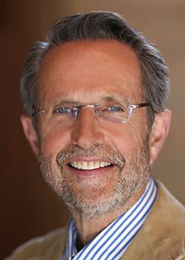
Bob Chapman
Truly Human Leadership
Editors’ Note
Bob Chapman is the chairman of Barry-Wehmiller and served as chief executive officer for 50 years. A sought-after speaker on human centered leadership (trulyhumanleadership.com), business growth and sustained performance, and culture transformation, Chapman strives to use his business leadership platform to build a better world. His nonprofit, Chapman Foundation for Caring Communities, and the Chapman & Co. Leadership Institute, both help to fulfill that goal.
Company Brief
Barry-Wehmiller (barrywehmiller.com) is a global capital equipment and engineering consulting company that combines more than 150 acquired companies across ten operating divisions worldwide. Barry-Wehmiller grew from $20 million in revenue in 1975 to more than $3.6 billion in 2025, with some 12,000 team members at 100+ locations in 30 countries, achieving 18 percent compounded growth.
Will you highlight the history of Barry-Wehmiller, and how the company has evolved?
Barry-Wehmiller started in 1885, making bottle washers and pasteurizers for the brewing industry. My father gained control of the company in the 1960s and I became CEO of Barry-Wehmiller in 1975 upon my father’s untimely death. At the time, the company was a broken business, with the brewing industry rapidly contracting. I was then in charge of a business with revenues of around $18 million, two or three million dollars of debt, and negative operating income of $477,000. It employed just under four hundred people, with three unions in the production and engineering areas. And a month later, devastated from the loss of my father and still finding my feet as CEO, the loan officer from our bank came by to tell me, “With your dad passing away, we’re going to have to ask you to repay our loan.”
Barry-Wehmiller had a number of ups and downs through the rest of the 1970s into the ’80s. In 1986, we had about $55 million in sales – pretty weak. I started doing acquisitions with no money. What do you buy when you have no money? Things nobody else wants. I patched together some acquisitions, had about $35 of our $55 million left when my English team came over and suggested we could perhaps spin off their part of the business to pay down the debt since I couldn’t even borrow $5 million at the time.
We patched those companies we bought together, each of which were extremely unattractive businesses, and then had a massively successful IPO on the London Stock Exchange. It was so phenomenal that Harvard wrote a case study on it that I began teaching. Barry-Wehmiller was really reborn in 1988 after that public offering. For probably nine months, I repeatedly counted the $28 million I had in the bank because I couldn’t believe it. We had no debt, and I now had a chance to move forward. I designed a business model, which took into account the mistakes and experiences I had in the ’80s, that reflects the company that we have today. So, we had a chance to begin again with some money in the bank, no debt, and some valuable experience. The company we have today, which started in the bottle washer and pasteurizer business, was not part of the public offering and it was the foundation of what we would build. Today, Barry-Wehmiller is a $3.6+ billion company developed from more than 150 acquisitions. We’re a global platform of industrial and packaging automation, professional services, and life sciences technology.
Will you discuss your career journey?
In the late 1990s, I had the first of three revelations that transformed the way I looked at my company, my own leadership, and business and management in general. I did my undergraduate studies in Indiana where I earned an accounting degree. I then received an MBA degree from Michigan and then went to work for Price Waterhouse in public accounting. I earned a further management degree and then got a job in management. So, what did I try and do? I tried to manage people which is what I was taught. But what is that type of management? It’s the manipulation of others for my success. I was never taught to care. I was taught to view people as objects. That’s a receptionist, that’s an engineer, that’s a salesperson. They’re not human; they’re functions for my success. Nobody actually teaches you that, but that’s the implication. You need these functions, and if you can justify some automation or some new technology, you can get rid of those people who you perceive as a problem. So, how do we define success in our society? Money, power, and position; not living lives of meaning and purpose. The way we define success is all wrong, but I was never taught in my undergraduate or graduate education nor in my work in the field, that our job as leaders is to inspire the people we have the privilege of leading to be all that they’re capable of being and to celebrate whatever that might be. I was never taught to care about the people I would encounter along my journey.
These three revelations form the basis of what I call Truly Human Leadership, which is the basis for my book, Everybody Matters: The Extraordinary Power of Caring for Your People Like Family.
.png)
The first revelation came when we bought a company in South Carolina in March 1997. It was college basketball’s March Madness. I flew down there on the first day of ownership. It was a serious investment. I was standing in the lunchroom, and everybody is having a ball talking about which college team won, who was in the final four, and they were having fun. The closer they got to 8 AM, you could just see that joy leaving their bodies. You couldn’t even say the word “job” or “work” with a smile. That day, I asked myself, why can’t work be fun? Why do we call it work? Why do we have TGIF (Thank God, it’s Friday) in this country – to get out of this place and drown my pain with beer? So, I thought, why can’t business be fun? I walked into a meeting and just off the top of my head came up with these games we could play that would create value and would be fun, and we began a profound change in culture. We were astounded by the results. I just wanted people to have fun, but we found that when people have fun, they perform better. And that wasn’t why we did it; I just wanted them to have fun.
The second of these revelations came when my wife, Cynthia, and I were at our church. The rector of our church, Ed Salmon, was a profound influence on our lives and a profound influence on how we raised our kids. During Ed’s sermon, I thought how amazing it was to have the privilege of standing before others and giving a sermon to inspire them to be who they are intended to be. I remember getting up from the pew and looking at Cynthia and saying, “Oh my God, Cynthia, Ed’s only got us for one hour a week. We have people in our care for 40 hours a week. We have 40 times more opportunities than the church to care for the people we have the privilege of leading.” I walked out of that church with the realization that business could be the most powerful force for good if it simply understood the profound impact we have on the lives of people we have in our care for 40 hours a week.
The third revelation came when the daughter of a friend of ours was getting married. I was sitting in the audience as he was walking his daughter down the aisle and everybody’s oohing and awing about how beautiful she looked and how proud he was. When they got to the altar, he took the hand of his daughter and he gave it to this young man and said, “Her mother and I give our daughter to be wed to this young man.” He sat down next to his wife, and they hugged each other before watching the ceremony continue. Now, any man who has walked his daughter down the aisle knows that is absolutely not what he intended to say. It’s what he was told to say. It’s what he was told to say at the rehearsal the night before the wedding. What he wanted to say is, “Look young man. Her mother and I brought this precious young lady into this world. We’ve given her everything we can give her so she can be who she’s intended to be. And we expect you, young man, through this marriage, to continue to allow her to be who she’s intended to be. Do you understand that, young man?” So, I sat there, and I asked myself, “Oh my God, all 12,000 of our people are somebody’s precious child, just like that young lady, and what are we doing?” That’s the day I no longer saw people as functions. I don’t describe people as engineers anymore. I describe them as special people in the world that I have the privilege of leading.
Within Barry-Wehmiller, as I was having these revelations and beginning to implement changes in the company, we started standing back and observing dramatic changes in behavior. We gathered a group of people together to ask what they felt was happening in our company. There were things much bigger than we could have imagined happening, and we started writing these things down. This was when the country was still in the environment of the Enron scandal, during which time I was somewhat concerned about how we define success in our country. So, I decided we were going to measure success not by the growth in our share value, not by the growth in our sales nor our market share, but we were going to measure success by the way we touch the lives of people – our customers, our team members, our bankers, our suppliers, and our communities. Success would be defined by the way we touch all those and we clearly articulated these values. This gave us the foundation upon which to base everything.
Bill Ury at Harvard, a world peace negotiator for the last 35 years, heard about our culture from author and organizational consultant, Simon Sinek, and he came in and spent two days talking to our people. After two days of talking to our people, not me but our people, he said he saw the answer to world peace. Now it seems ridiculous that you go to a manufacturing company and see the answer to world peace. So, I asked Bill to help me understand that. He said, “Bob, I saw a place where people genuinely care for each other.” That is the world he imagined where we have world peace. When we peeled it back, he said, “It’s amazing how many people describe the company as a family. They don’t describe it as “like a family.” They describe it “as a family.” Now, these people are not related to each other, other than as humans. So, why do they use the word family and what does family mean? It means the place of ultimate care and love. That’s what it should mean – a safe place. So, when people describe their experience here as a family, it means they feel safe and valued.
What we realized is that we needed to begin to teach this. So, we put a team together because I was worried that this blessing I was given would die with me. We put a team together and began to analyze how we were going to transform the managers that our university creates into leaders who genuinely care and have the skills and courage to care for all people they lead. We put together this collective team and we teach three fundamental things in our university. The first is empathetic listening. We have learned that the most powerful skill for all human relations is empathetic listening, not listening in order to debate or judge, but listening to understand and validate. It is transformative. My wife, Cynthia, and I raised six kids. One of the things we learned is that if you don’t compliment your kids five times before you suggest they do things better, it’s difficult to get them to change. The second is that we brought a class into our university where we teach recognition and celebration and how you let people know that they matter, in timely, thoughtful, meaningful ways. The third class teaches about creating a culture of service and seizing the opportunity to serve others. We have been teaching these for about 20 years around the world. It amazes me that 95 percent of the feedback we get from our graduates relates to how these lessons have affected their marriage and their relationships with their children. I never was taught, nor told, nor read anything that indicated that the way I would run a global company would affect people’s personal lives other than through salary and benefits. But when we teach people how to be leaders, they tell us they’re better husbands, better wives, better parents, better citizens. So, we then realized that this gift, again, was profound. It was so powerful that Harvard did a case study on our culture, and they told us last fall, it’s now a Harvard bestseller. Seventy universities all over the world use it to teach our culture of caring. Our book, Everybody Matters: The Extraordinary Power of Caring for People like Family, which originally came out in 2015, was just re-released in a revised and expanded edition. We formed our consulting company, Chapman & Co. Leadership Institute, to bring our learning to other organizations and give them the tools to help cultivate cultures with people and performance in harmony.
My wife, Cynthia, and I founded the nonprofit Chapman Foundation for Caring Communities to partner with municipal and nonprofit organizations to bring our transformational empathetic listening training to communities. We began to work with universities to transform business school curriculums to help create citizens of the world who have a unique blend of academic skills and human skills before they become the leaders of tomorrow. I deliver our message in speaking engagements all over the world – not just to audiences in manufacturing, but to those in the healthcare and hospitality industries, global CEOs, the U.S. military, the U.S. Congress, and leading academic institutions like Harvard University, Fordham University, and Washington University in St. Louis. In 2022, I gave the first of two speeches to the United Nations, a crowning achievement of my career. This is my calling – to help other leaders understand the impact their leadership has on the lives of others.
You mentioned Barry-Wehmiller’s growth through acquisitions. How do you maintain culture across such a diversified organization?
Years ago, a senior executive at a major automobile company asked me what kind of return Barry-Wehmiller received from our investment in our culture. I responded, “Are you kidding me? Did you just ask me what kind of financial return I get for caring?” And he said, “At my company, we are extremely numeric.” And I said, “That’s pitiful.” Then he told me that only 30 percent of the people at his company would recommend a job there to a friend or family member. No kidding.
Because we’re a large, global organization, we have many different ways of engaging our team members to listen to them. I host listening sessions when I travel to locations and virtually. But we also have a company-wide survey we call “Every Voice Matters.” The questions of this survey reflect the principles of Truly Human Leadership, focusing on the emotional and relational aspects of work that are often overlooked in profit-focused organizations. A key finding was that 82 percent of our people feel cared for, respected, and listened to by their direct leaders. In stark contrast, Gallup reported that in 2024, only 21 percent of people strongly agreed that their organization cared about their well-being. So, the real ROI for caring is having teammates that feel valued and understood by their leaders and teammates because they feel fulfilled by the time they’re spending away from their homes and families – they are inspired and energized instead of stressed. And because they feel cared for, when they go home to their loved ones, they share that joy and fulfillment instead of the stress and bitterness of feeling unappreciated and insignificant.
“Leaders inspire. Leaders care. Leaders help people grow. It’s not about the tasks; it’s about the person.”
How do you approach your management style?
There is a stark difference between management and leadership. I have come to realize that the word management means the manipulation of others for your success. By contrast, leadership is the stewardship of the lives entrusted to you with the vision of sending them home each night knowing that who they are and what they do matters. No one wants to be managed. You don’t manage your spouse or child. People want to be mentored. They want to be coached. They want to be led.
Throughout business and organizations, people continue to be taught to be managers, not leaders. They make sure everyone is in their seat on time, they take headcount for the day, they check off the boxes of daily tasks. Leaders inspire. Leaders care. Leaders help people grow. It’s not about the tasks; it’s about the person.
It is a universal truth – every one of us, no matter what our job or where we live, simply wants to know that who we are and what we do matters. As leaders in business, we have the awesome responsibility to let people know that they do. We have a responsibility to recognize the inherent dignity in our people and honor that, not break it. When you stop seeing people as numbers on a page, but as someone’s precious child, you’ll worry a lot less about recruitment, retention, and resignation. You’ll help unlock a sense of care and fulfillment that your people will take home and spread far and wide to their families and communities. And that’s not just leadership; that’s Truly Human Leadership.
With all that you have accomplished during your career, are you able to enjoy the process and take moments to celebrate the wins?
I often say I won’t leave this earth proud of the machines our company has built, but rather the people who built those machines and the lives we touch each day through the course of our business. We at Barry-Wehmiller have been blessed with a message that can change the world. We’ve seen the change it brought to our company and the lives of those here within our span of care. As we were told a long time ago, we would be selfish if we did not share our experience with others. That is why I wrote my book and why I continue to speak to whatever audience will have me. Through the Barry-Wehmiller story, I want to show people the impact business can have on people’s lives. That business can be a powerful force for good. That the way we lead impacts the way people live, and that is what I will continue to do.
What advice do you offer to young people beginning their careers?
I find most people look at life as a series of events and milestones: going to college, getting a job, getting married, buying a house, and having kids. Most people live their lives reacting to events that are traditional ways of thinking. I think if people see life more as a journey, not a series of events you react to, you can have a greater sense that you’ve lived life fully using your gifts to leave the world better than you found it. Our goal is to help people find their journey that would make them proud. We’re working with schools so that when people graduate from high school or a university, they have given some thought to writing their own eulogy. One hundred years from now, when you leave this earth, what do you want people to say about your life that will make you proud? Write it out, and then go make it true.