- Home
- Media Kit
- MediaJet
- Current Issue
- Past Issues
- Reprints (PDF)
- Photo Specifications (PDF)
- Contact Us
- PRIVACY POLICY
- TERMS OF USE
Loading

ONLINE

Christoph Hinterleitner
The Optimum Vessel
For Drinking
Editors’ Note
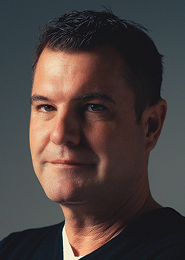
Christoph Hinterleitner was born and raised in Vienna. He received a Master of Business Administration degree from the Vienna University of Economics and Business. After completing internships in Bangkok, Chile, and Los Angeles, he joined the REWE Group for a traineeship to join the management in sales. In 2011, Hinterleitner joined ZALTO in marketing and sales. In 2012, he became General Manager/CEO of ZALTO. Since 2024, Hinterleitner’s father passed his shares of ZALTO to him and his brother, and together with their business partner, Josef Karner, are the management of the owner-managed family business. Hinterleitner has won six Austrian Championships in junior and senior class in rowing.
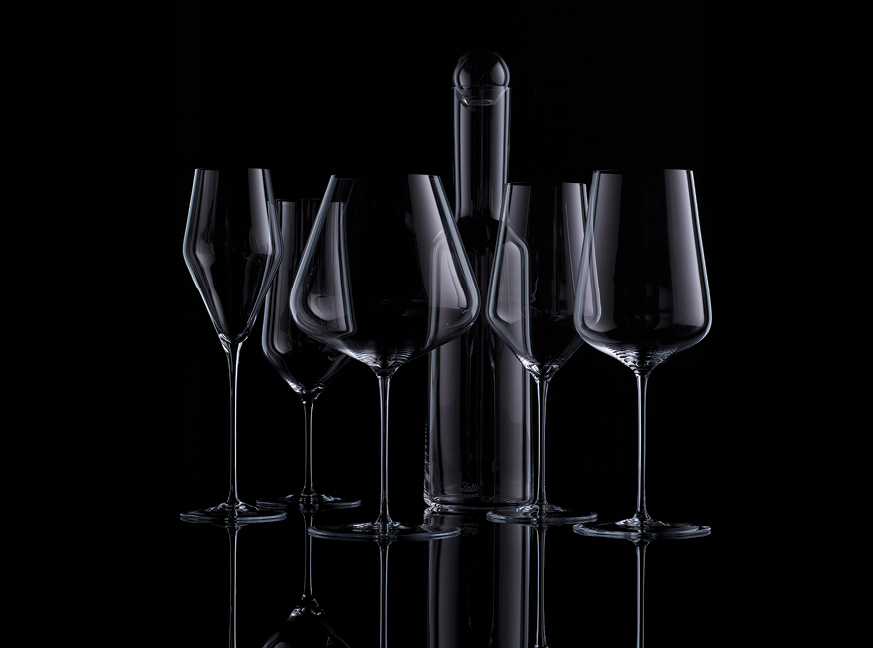
ZALTO wine and beverage glasses (above and below)
How do you describe ZALTO’s mission?
Our goal is to provide the optimum vessels for enjoying the wines and beverages of the world and to enhance the experience by expressing the best characteristics of the wines. The glasses should become almost invisible, owing to the minimalistic design and weight to then focus on the wine. We want to offer a concise range to best cover all the different types of wines by offering as few as possible, but as many as needed, to achieve this. Everything is done with a deep respect for wine and a focus on traditional hand production which we still consider superior. Despite the highest standards and market position, the glasses should be accessible to any serious wine lover and suitable for daily use as well as in any professional environment.
Will you discuss ZALTO’s history?
We began more than 20 years ago with the vision of Mr. Hans Denk who had the idea to create the perfect series of glasses to cover all the different characters of wines rather than be determined by grape varieties. After years of testing and numerous prototypes, he presented the glasses in 2004. The glasses immediately got the attention of top winemakers and sommeliers who gave very good feedback about them as a new benchmark for functional wine glasses and became the first adopters. The small glassworks which produced the glasses in cooperation with him was about to become bankrupt so the promising new project was close to ending before the glasses could have reached a broader market.
My father and his business partner knew Mr. Denk and the products as they were managers of the largest Austrian sparkling wine producer and one of the largest wine importers. They eventually invested and took over the brand rights of ZALTO and Denk Art, as well as the intangibles from Mr. Denk, and started to set up marketing, sustainable production and international sales. The first few years were challenging for them, mostly meeting numerous professionals to show and explain the glasses but soon by word of mouth the quality and functional superiority was spread among winemakers, restaurateurs and wine lovers.
From the beginning, the approach was a niche concept in handmade production which was almost nonexistent at that time, with sustainable brand building from the top down, starting with placement in the top restaurants and wineries, followed by fine wine connoisseurs and the introduction into other retail channels.
Today, my brother and I, the second generation, are in charge and together with our partner, Josef Karner, who started the project with our father, we are the management of our family owned and managed company. We export to more than 90 countries worldwide and in our niche are the provider of the most successful handmade stemware.
Will you highlight ZALTO’s product offerings?
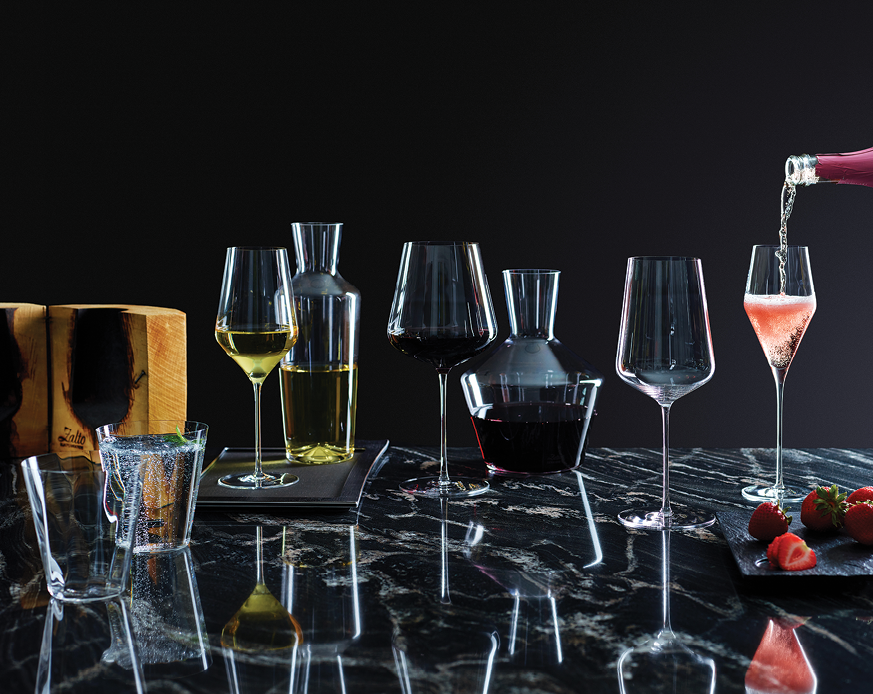
The core range is still the Denk Art range which has been there with slight adaptations and additions for more than 20 years. The handblown series of functional very light and thin stemware is designed to cover all characters of wines and beverages that require a specific shape to be enjoyed with optimum precision. In addition to that, we offer decanters, cups, carafes and accessories. All products are exclusively handmade and there are no other functional wine glasses from us beside the Denk Art series. There is only one ideal glass for a certain character of wine and if we find a better shape than what currently exists, we add it to the range. This approach was rewarded when the glasses were given the “Unimprovable Award” in the renowned Wall Street Journal as one of six products of their kind that could not be improved.
A year ago, we introduced the Balance glass to the range, a glass for wines that derive their balance and structure from phenolics, tannins, long lees ageing or deliberate use of wood rather than from classic fruit and acidity. The aim was to integrate balance and harmonize without distorting the true character traits.
We are honored that most of the top winemakers in the world and a lot of the best restaurants use our glasses in their daily business. Recently we found that 20 out of 30 Michelin three-star restaurants in France are customers.
How do you differentiate ZALTO in the industry?
The main thing is that we share a real passion for wine. This has been our driving force from the beginning; a deep respect and approach to understand the wine and to offer the best possible stage for the perception of wine. This goes back to the beginning as the first glasses were thought about and created by a wine lover and expert, rather than a designer. We are not driven by marketing or design thinking, but rather for the search for the optimum vessel for drinking. No shape has been introduced without a reason that is rooted in functionality.
The core value of our company is still that we love wine and try to bring out the best in any wine. It should be the wine that takes center stage in wine pleasure. The glass should sit back and let the wine shine with all its nuances. This is the reason why we craft them as thin as possible. Like a loudspeaker, a glass should show the wine perfectly in every detail. It should not distort or soften like an equalizer.
We love to taste thousands of wines over a year in different glasses to evaluate and make sure the glasses still work best for each character as well as evaluating new shapes that might make a contribution for specific wines and drinks to uplift the tasting experience.
Another thing is that we still believe in hand production. The majority of other glass producers have mainly machine-made glasses and only minimal handmade products to enhance reputation. Contrary to handmade watches where industrial quartz watches are more precise, but which still carry the fascinating exclusivity of handmade excellence and complicated mechanics, handmade glasses are one of the last fields where man is more precise and finer in execution than a machine. Not only is the fineness we need for our glasses not achievable by machine, the precision of the thin sidewalls and especially the transitions at the stem and foot is incomparable with machine-made glasses. From a functional sensory point of view, handmade glasses are superior. Due to differences in the production process, the surface of a handmade glass is microscopically rougher and offers a much larger surface for the enhancement of aroma than a machine-made glass. This is the reason why any ZALTO glass is made exclusively by hand in a more than 1000-year-old tradition making each glass an individual masterpiece.
Where do you see the greatest opportunities for growth for ZALTO?
First, of course, is growth in new markets as well as development in underdeveloped wine markets, and second is slight adaptations and new products. There are so many countries and regions where we still see that the culture of wine drinking and appreciation of wine in combination with a serving culture is at the beginning and a lot of people are ready to adopt wine drinking habits. To be in these markets is an important initial step as well as to convince the drinkers that the perfect glass can make a big difference to the perception of wine. I also believe that in traditional wine drinking countries there is still room to demonstrate and convince people about the value of our glasses.
Additionally, we are constantly testing and evaluating sensible additions to our current portfolio. Most importantly for this is not only to have a new item for marketing or additional sales, but to have a glass that is a valuable contribution and fulfills the functional and qualitative requirements and gives an additional sensory experience for a specific drink.
What has made the working relationship between you and your brother work so well?
I think we complement each other very well. Each of us has his strengths. What also helps is that we share a similar passion for the product and the wine. To love what you do is a good base for a family business. New developments and strategic discussions often go hand in hand with a nice bottle and an informal talk. However, a good balance is key and to make a clear distinction between family and business is important for a healthy relationship and cooperation.
What are your priorities for ZALTO as you look to the future?
The most important thing for us is to maintain the level of quality and to be consistent in brand building and in our strategy. Even though times are economically challenging, it is key not to compromise on quality, but also not on positioning and price. We see that there is a shift to save on some luxury products, however to change by introducing cheaper lines or price promotions for short-term marketing reasons would not align with our philosophy of offering uncompromising quality. On the other hand, the glasses must still be available for any ambitious wine lover as well as for restaurants to use in their daily business. This is the reason why we work hard to cope with the challenges of rising energy prices and overhead to keep the prices stable.
In terms of quality, it is a priority to maintain the high level of skilled blowers. To keep very high standards and find people for this difficult job is one of the main challenges for the future.