- Home
- Media Kit
- MediaJet
- Current Issue
- Past Issues
- Reprints (PDF)
- Photo Specifications (PDF)
- Contact Us
- PRIVACY POLICY
- TERMS OF USE
Loading

ONLINE

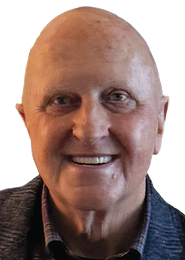
L. Dennis Kozlowski
Making A Difference
Editors’ Note
L. Dennis Kozlowski grew up in New Jersey and received his Bachelor of Science in Business Administration from Seton Hall University in 1968. Upon graduation, Kozlowski held various management positions at SCM Corporation in New York City and Cabot Corporation in Boston. Kozlowski joined Tyco International in 1975. At that time, Tyco was a small ($20 million revenue) technology-driven company. He and his team commercialized the core technologies of Tyco. In 1989, Kozlowski was appointed Chief Operating Officer of Tyco International, CEO in 1990, and Chairman of the Board in 1991. Under Kozlowski’s leadership, Tyco grew into a global giant of over $40 billion in revenue and a market capitalization in excess of $110 billion. The company employed 260,000 people in 60 countries. Much of the growth was accomplished by high profile worldwide acquisitions. Under Kozlowski’s leadership, Tyco constantly ranked as one of the 50 largest and most profitable companies in the world with its growing medical, security, electronic, flow control, and telecom businesses. He parted ways with Tyco in 2002 in a scandal that is well documented in Professor Catherine Neal’s book Taking Down the Lion. Kozlowski received a Doctor of Business Administration from The University of New Hampshire, Honoris Causa, and Roger Williams University. He currently resides in South Florida.
You’ve been known throughout your career to be a builder. What have been the keys to your success in growing and building a business?
To build a business a clear vision is needed to determine your objectives. The vision includes what problem you are solving, what opportunity you are creating, and why your customer needs or desires your product or service. To achieve a sustainable growing business there must be a pathway to be a market leader and be the best value producer. A good team is critical because you can’t do it alone. The team must share your vision. You must also have the access to capital or capital markets to make it all happen.
Once you are up and running, consistent profitable growth keeps the business alive and prospering. Organic growth is the key to success, but at times acquisition opportunities may be appropriate. In my experience, acquisitions can be highly desirable and meaningful in adding value to a company. A disciplined approach to acquisitions is required to be successful. A bad acquisition will often cripple a company.
Will you highlight your business focus and involvement today?
We (Family Office) have channeled significant energy into where technology meets healthcare. We took on the high cost of prescription drugs years ago and have significantly reduced the cost of the drugs to our customers and patients in a wide range of markets. Our focus is on innovative solutions to reduce healthcare costs for everyone and help people live better and healthier lives. Additionally, we are expanding our reach into pharmacy deserts. At the same time, we are helping many people access and afford the essential pharmaceuticals necessary for their survival and well-being.
In another of our businesses, we focus on airplane and helicopter pilot training. We have employed technology using both virtual and mixed reality to better train pilots both economically and qualitatively. Many years ago, I trained and ultimately licensed for both fixed wing and rotary aircraft. The training I experienced over time was a highly inefficient and expensive process.
Employing today’s virtual reality and mixed reality technology can now greatly enhance pilot training at both early and advanced stages. We can bring the initial training equipment to you rather than you coming to an airplane or large simulator center. We can replicate the sensation and challenge of flying your aircraft. Once you’ve conquered the basic flying knowledge and idiosyncrasies of a particular aircraft using our technology, you are better prepared to fly the actual aircraft. The end result is often a more knowledgeable, tested and economically trained pilot. We all want the best trained and most competent pilots. Our in-house-developed virtual reality systems accomplish that mission.
“To achieve a sustainable growing business there must be a pathway to be a market leader and be the best value producer.”
You commit your time and expertise to philanthropic work, including addressing criminal justice reform. Will you discuss these efforts?
I didn’t just study the criminal justice system in the United States; I unintentionally did field research and experienced it years ago. Over the last 15 years, I put what I learned into practice to provide former offenders the support and opportunities they need to avoid repeating their experience in the justice system. My primary efforts have been at The Fortune Society, which I Chair. We helped more than 15,000 people this year alone reenter society with meals, healthcare, housing, and job training to provide dignified and desired alternatives to incarceration. I am proud of the fact that The Fortune Society has greatly expanded its reach and budget from about $20 million when I initially joined to over $100 million today. More importantly, we can point to many thousands of successful outcomes that Fortune clients have achieved including the fact that many are now taxpayers.
Additionally, for the last 15 past years, I’ve shared my personal story with many different college and university students, business school groups, professors, business leaders, professional organizations, and others nationwide as well as with groups outside of the United States. Speaking candidly to the audience, I’ve learned you really never know who you are until your wins stop speaking for you and your mistakes take over the narrative. After more than 25 years of public business successes and countless accolades, my success didn’t protect me. It exposed me. However, my story did not end with losing it all. Resilience and reinvention became my goal. I encourage others to share those same goals every chance I get.
I can also say that now my life has never been more fulfilled and balanced. My priorities are relationships with my family, grandchildren, and friends. I’m making a difference through personal investment and involvement with chosen philanthropic organizations. I enjoy coaching those that are running the organizations.
Finally, I’m also investing in select businesses and mentoring the next generation of business leaders who will make a difference with ethical and competent leadership.
“Our focus is on innovative solutions to reduce healthcare costs for everyone and help people live better and healthier lives.”
What do you feel are the keys to effective leadership?
When it comes to effective leadership, whether running a business or a philanthropic gig, you need an ethical and transparent culture, genuine empathy, support for those that trust your leadership, a clear vision, excellent communication skills, the ability to inspire people to keep things running even with inevitable surprises and, importantly, have everyone feel they are part of something worthwhile and important.
If you can tick those boxes, you are a true leader.
How do you approach your management style?
I’d like to think of my management style as having a vision and being able to communicate and share my vision with all the stakeholders of the organization. It could at times be a bit autocratic, but mostly democratic with a touch of laissez-faire where appropriate.
When you recruit smart, capable people who are in sync with your vision, I find it’s best to just let them do their job. Don’t overmanage. Others may require a bit of coaching, cheerleading, or even some help navigating. It takes good listening skills and insight to be a successful leader. You must also adapt your management style to those you are managing.
Bonus programs are also a key to leadership motivation programs. Once financial objectives are set and agreed to, bonus programs are a key motivator. The bonuses should be meaningful, easily understood, be at risk, and pay for performance.
“I can also say that now my life has never been more fulfilled and balanced. My priorities are relationships with my family, grandchildren, and friends.”
What advice do you offer to young people beginning their careers?
The most successful people I’ve witnessed in entrepreneurial, small, medium, and large businesses are the most curious. They are motivated by the fact that things are often not as they appear to be. By applying healthy curiosity and then knowledge you can make meaningful contributions.
The other skill that needs to be developed is networking. Not necessarily social media networking, but meeting with people networking. People often do business with people they know and like. Real opportunities do not happen on your screen or in your notifications – they happen face-to-face.