- Home
- Media Kit
- MediaJet
- Current Issue
- Past Issues
- Reprints (PDF)
- Photo Specifications (PDF)
- Contact Us
- PRIVACY POLICY
- TERMS OF USE
Loading

ONLINE

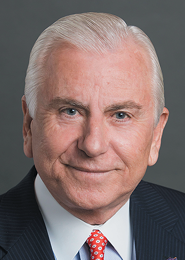
Nido R. Qubein
Preparing Students
For The World
As It Will Be
Editors’ Note
Dr. Nido Qubein became the seventh President of High Point University in January 2005. Since that time, enrollment has quadrupled, campus has expanded from 90 to 560 acres, and academic schools have grown from 3 to 14. Qubein came to the United States as a teenager with limited knowledge of English and only $50 before going on to build business partnerships in banking, real estate, publishing, and retail businesses. Prior to his role as HPU President, Qubein rose to prominence as an internationally known author and consultant who has given more than 7,500 presentations worldwide. He has served on the corporate boards of several Fortune 500 companies including Truist, the sixth largest bank in the nation, La-Z-Boy, and Savista. Qubein is also executive chairman of the Great Harvest Bread Company. Among numerous honors and recognitions he has received, Qubein is an inductee of the Horatio Alger Association for Distinguished Americans, along with Oprah Winfrey and Colin Powell.
University Brief
Founded in 1924, High Point University (highpoint.edu) is a liberal arts institution located in the Piedmont Triad region of North Carolina. “America’s Best Colleges” 2026 Edition, published by U.S. News & World Report, ranks HPU #1 among all regional colleges in the South (the fourteenth consecutive year at number one). It also ranked HPU for the eleventh consecutive year as the #1 Most Innovative Regional College in the South for innovation in curriculum, faculty, students, campus life, technology, and facilities. HPU was named for the fifteenth consecutive year to the national “Colleges of Distinction” list. HPU also earned Fields of Study distinctions for the Phillips School of Business and the Stout School of Education. The Princeton Review named High Point University as one of the nation’s top institutions for undergraduate education, including recognizing HPU as the #1 Best-Run College in the Nation for the second consecutive year in the 2026 edition of “The Best 391 Colleges.” HPU was also recognized among the Top 20 in the nation for Best Career Services, Most Beautiful Campus, Most Active Student Government Association, and Best Campus Food, as well as a Great School for Business/Finance Majors and a Great School for Communication Majors.
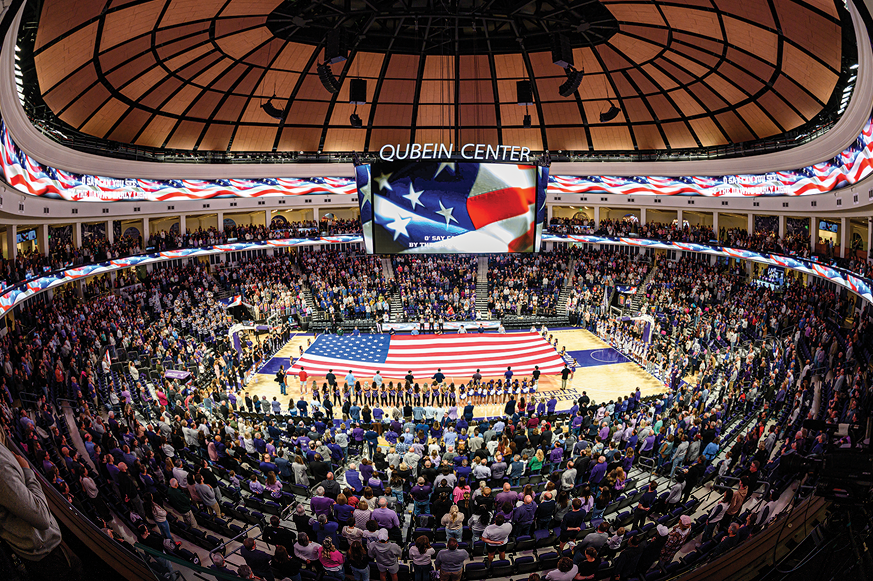
Qubein Center at High Point University
What do you feel are the keys to effective leadership?
Good leaders must be what they want their followers to become. The leader who can’t communicate can’t create the conditions needed to motivate people to do their very best work. People don’t respond to what you say, they respond to what they understand you to say. A good leader must never stop learning and being inspired. Make sure thoughts are coming into your brain, heart and soul that tell you God loves you, your family loves you, and there are people who want to march onward and forward with you, holding your hand as you tackle the challenges of this world.
The only way to keep from making mistakes is to do nothing – and that’s the biggest mistake of all. Successful people don’t avoid risks. They learn to manage them. They don’t dive off cliffs into unexplored waters. They learn how deep the water is and make sure there are no hidden obstacles. Then they plunge in.
Leaders take risks. Sometimes you aren’t sure, because you never have 100 percent of the information you need to make the right decision. You’re making the decision based on having 70-75 percent of the information, using your frame of reference, your judgment, your maturity and your wisdom to make the right decision. One of the biggest mistakes a leader makes is failing to evolve, develop and grow a trusted team around them to share ideas with, test ideas, examine thoughts and listen to their feedback. Often, I find, out of the most unlikely sources come the greatest inspiration.
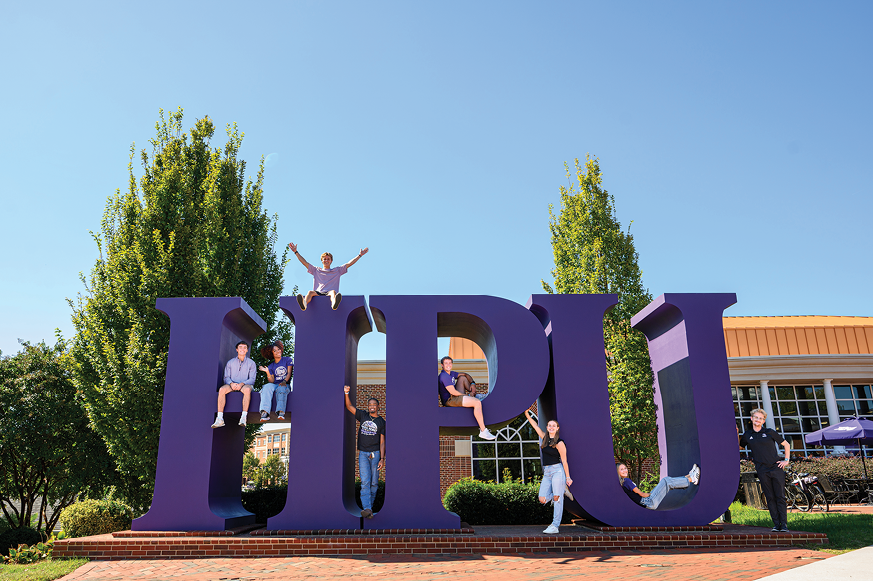
High Point University students posing on the HPU sculpture
How do you see HPU’s model of combining values, life skills and academic education evolving?
Values and life skills are woven into every aspect of High Point University’s curriculum and campus. As The Premier Life Skills University, HPU prepares students to not only be experts in their field, but also experts in professionalism, communicating effectively with others from different backgrounds, adapting to a rapidly changing workforce and thriving amidst change. This empowers students to build relationships, continually grow, succeed in competitive environments, and navigate complex situations without being intimidated by life’s obstacles. It’s no surprise that families are eager to invest in an extraordinary learning environment that focuses on life skills, values and impressive academic facilities that inspire students to learn. Students and parents also appreciate the impressive outcomes HPU graduates obtain, with 99.2 percent of our alumni employed or enrolled in graduate school within 180 days of graduating. That’s 14 points higher than the national average.
HPU has paid attention to the marketplace because we’re committed to the success of our students. The university has also listened to employers who have repeatedly said they need graduates who have not only technical skills, but also life skills that outlast technical skills, which are constantly changing. Through HPU’s Access to Innovators Program, industry leaders regularly come to campus to mentor students, including the co-founders of Apple Computer and Netflix and executives at Morgan Stanley and Domino’s. Where else will students learn directly and continually from leaders of this caliber?
During my two decades and counting as HPU’s president, the university has grown from three academic schools to 14. With the opening of our new law school and dental school, and a future School of Optometry on the horizon, we’re finding new ways to weave values and life skills into our curriculum. These new students work directly with community members who come to them for assistance, and we want to ensure that they practice with integrity, professionalism and the highest character.
HPU is home to a nationally ranked Office of Career and Professional Development (#9 in the nation according to The Princeton Review), which hosts continual programming for students to hone their professional development, whether through HPU in the City networking trips to New York, Boston, Washington, DC and Dallas; during one-on-one career advising appointments; at one of several career fairs hosted on campus; in a fine-dining learning lab over a meal; and at many workshops that reflect HPU’s focus on life skills. Students can also earn micro-credentials in categories such as coachability, emotional intelligence and more. Our commitment to preparing our students for success and to live a life of purpose won’t change as we continue to grow.
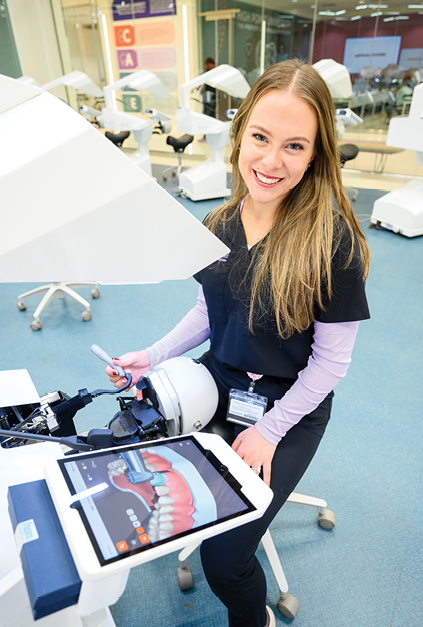
Workman School of Dental Medicine at High Point University
HPU has grown rapidly in enrollment, facilities, etc. How do you ensure that growth doesn’t come at the expense of academic quality or student experience?
There is no doubt that HPU has achieved transformational growth at a time when other universities across the nation are experiencing a decline in enrollment. This fall, the university welcomed its largest freshman class (growing by 9.4 percent to 1,671 students) and largest total enrollment in HPU history (growing by 3.4 percent to 6,550 students). HPU’s enrollment has nearly quadrupled since I accepted the challenge to serve as president in January 2005. I had thought I would only be president for two years, but I recently became North Carolina’s longest-serving active college president. Our campus has grown from 90 acres to 560 acres during that time. Academic and career resources have also increased exponentially. In August, HPU was named the #1 Best-Run College in the nation for a second consecutive year by The Princeton Review. The university is consistently recognized for its commitment to innovation and student success.
While we appreciate these accolades because they recognize the commitment and hard work of our dedicated faculty and staff, it’s not what motivates us to come to campus every day. We remain dedicated to preparing students for the world as it will be. That was my top priority when we were a small, regional institution in my first year as president, and it remains my mission now that we’ve grown and are approaching 7,000 students.
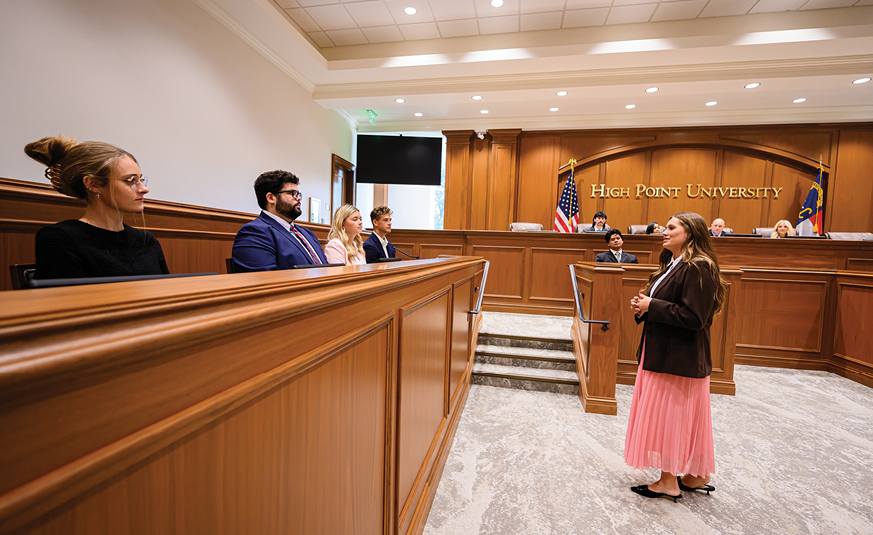
Kenneth F. Kahn School of Law at High Point University
What led to the creation of “The President’s Seminar on Life Skills” and how do you define its mission?
At HPU, freshmen benefit from having a Success Coach who helps them transition from high school to college life and connect with resources at HPU. Our faculty and staff also do an incredible job of helping first-year students get acclimated. And as the university president, I also relish the opportunity to teach these new students about the importance of serving and living a life with purpose. I take great pride in being able to spend time every week during the fall with the entire freshman class and helping them develop a broad range of relevant life skills, including fiscal literacy, time management, effective communication and leadership abilities.
I believe freshmen can benefit personally and professionally from hearing lessons that I’ve learned during my career as a successful entrepreneur, consultant to top CEOs, and university president. One of my favorite lessons that I teach during my First-Year Seminar on Life Skills is about gratitude. To make this point, I give a teddy bear purchased from the American Red Cross to every freshman and challenge them to give it to someone who has helped them along the way. A stuffed animal makes you feel loved and secure. I want them to live with the teddy bear and hug it for 30 days, but after that, I want them to give it to somebody who has made a difference in their lives and explain to them why. Students have until Christmas to do this. This simple act of kindness has become a tradition at HPU, and over the 15 years that I’ve been doing it, I’ve heard heartwarming stories of students who have given their teddy bears to their parents, their siblings, teachers who have mentored them, and even a nurse who cared for a student’s grandfather in the last days as he battled cancer.
What do you see as the responsibility that universities have to their surrounding communities?
I’m very clear in that HPU is High Point’s university with an apostrophe s, and we wouldn’t have achieved our record growth over the past two decades without the city’s partnership and the support of countless community members. Our faculty, staff and students show their appreciation by giving back to the community – dedicating 500,000 hours of service every year. As one example, HPU students donate more than 2,000 hours on Martin Luther King Jr. Day, partnering with 40 local service projects. They donate food, plant trees, and paint local schools to brighten them up for the students who go there. This is all part of the values-based education that we provide, which fosters gratitude, generosity, civility, respect, patriotism, an entrepreneurial spirit and more. Parents appreciate that the values they instilled in their students are furthered on our campus.
The HPU family stepped up in a big way after Hurricane Helene impacted western North Carolina. Students, faculty and staff raised more than $33,000 to help those affected by the hurricane, including $5,000 to purchase Christmas gifts for children in the region. They also donated thousands of bottles of water and hundreds of boxes of food, diapers, warm winter clothing, cleaning supplies, and dog and cat food to help with the hurricane relief efforts.
HPU is a God, family and country school. Every year, the university hosts what is believed to be the largest Veterans Day Celebration on a college campus. It’s our way of honoring and celebrating local veterans, and it’s made possible by hundreds of student, faculty and staff volunteers. I wish you could see the smiles on the veterans’ faces as our students line up to greet them and thank them for their service when they arrive on campus for this free event. This is in addition to HPU’s new pro bono veterans law clinic to help injured veterans receive disability compensation benefits from the U.S. Department of Veterans Affairs. The clinic is staffed by second-year law students.
You came to the U.S. with little money and knowledge of English. What were the most formative moments for you in that journey?
I came to this country on a one-way ticket, seeking an education at Mount Olive Junior College. When I arrived in America at age 17, I had a limited English vocabulary and no more than $50 in my pocket. My very first Christmas in this country, I had no place to go.
The school shut down. I found a church that took in what we then called foreign students. I was 7,000 miles away from my homeland. I came here to make a difference. I was determined that I was going to be successful. I hung around with the right people. I listened to the right advice.
My freshman year, my housemother changed my life. She invited me to her home when other students would go home on Saturdays. At that time, I had no car. I had $75 to buy a car, and I was disappointed to find that the cheapest car on the lot cost $750. My mother told me long ago, “It’s okay to be disappointed, but it’s never okay to be discouraged.” After I talked with my housemother, I looked at my bank statement and lo and behold, I had $750. At first, I said, “I love this country. The bankers don’t know how to add.” Then it dawned on me that this woman, who had very little money, had done this for me. She said, “I decided it’s much better for me to invest my money in the life of this budding young man than in my savings account.” That woman made my dream come true.
The way my speaking career began was when the president of Mount Olive College would take me with him to speak when he made speeches, raising money for the college. He said I was an outstanding sophomore, and he knew I was raising money to go to school, but there was a chasm between the money I owed the school and what I had paid. My heart sank. Then he said, “You’ll be glad to know there’s a doctor in the neighboring city of Goldsboro, North Carolina, who picked up the tab for the difference.” Another angel had just crossed my path. I said, “Who is this doctor? I’d like to repay him.” But he wanted to be anonymous. On that day, I made a commitment to God Almighty that when I worked and made a couple of bucks, I would help someone go to college.
In 1973, my first year of starting a business, I had saved $500 and was eating peanuts and frozen dinners, but I had made a commitment to God. You make a decision with your brain, but you make a commitment with your heart. That’s why commitments are longer-lasting and harder to break. So, in 1973, I took the $500 I had and started what was then called the Qubein Scholarship Foundation. Since then, 800 students in the city of High Point have gone to colleges and universities across North Carolina because we helped them get a scholarship.
Now you understand why I’m president of High Point University. Now you understand that when they asked me to be here in 2004, I said, “No, I don’t want to be a college president” – I was on top of the world and had several businesses doing great. God kept talking to me and saying, “Life’s been good to you. You need to be an angel in someone’s life.”
When you look to the future of education, what excites you the most, and what concerns you the most?
Higher education has reached an inflection point. Families are questioning whether a college degree is worth the cost, and in the wake of the coronavirus pandemic and inflation, many students are choosing to instead attend a technical school or to immediately enter the workforce. That has resulted in colleges and universities across the country competing for a smaller pool of high school graduates, and unfortunately, some institutions have needed to make tough decisions to address budget issues. But when I wake up in the morning, I am encouraged more than ever by the education, values and life skills that we are instilling in our students at High Point University. We are intentional and prepare our students to stand out from other job applicants. And it is hard to argue with the results, with our overall placement rate standing 14 points higher than the national average.
This isn’t the first time during my time as HPU’s president that higher education has faced strong headwinds. For example, our university was in the middle of a major expansion on campus when the market crashed in 2008. But rather than pause construction, we decided to keep going. A few years later, when the COVID-19 pandemic started, we chose to keep campus open and continue to safely offer in-person learning to students.
We bucked national trends of enrollment decline and welcomed our largest freshman class and the largest total student enrollment this fall. HPU has continued to grow. We broke ground in August on our new $100 million John and Lorraine Charman Library in the heart of campus, and only a few weeks later, we officially opened two impressive academic buildings for our new law school and dental school.
All of this makes me excited for the future of High Point University. We have become a leader in higher education and are an example of how to navigate through all the obstacles that the academy is facing. We’re resilient and keep moving forward with faithful courage.