- Home
- Media Kit
- MediaJet
- Current Issue
- Past Issues
- Reprints (PDF)
- Photo Specifications (PDF)
- Contact Us
- PRIVACY POLICY
- TERMS OF USE
Loading

ONLINE

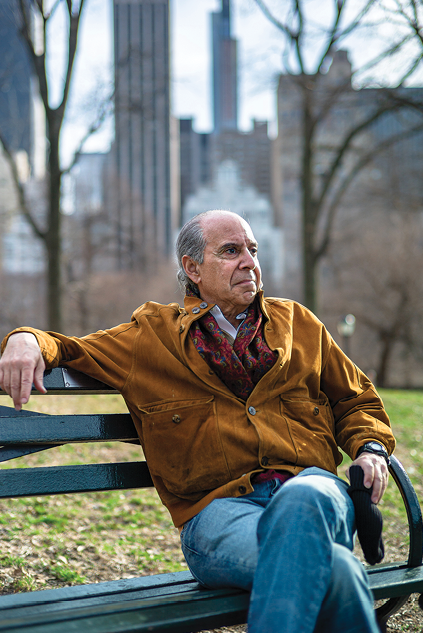
Hassan Nemazee
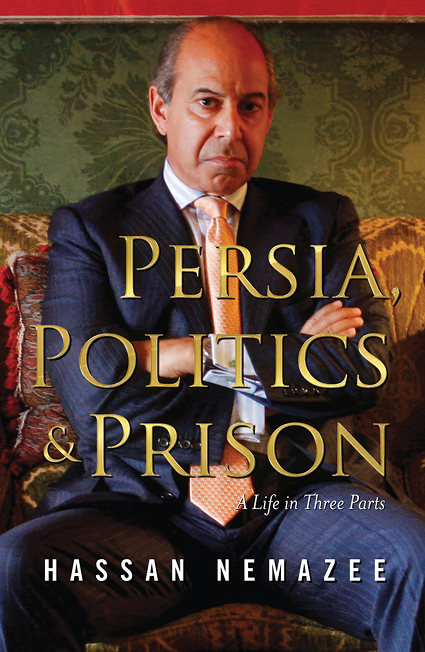
Persia, Politics & Prison
Editors’ Note
Known for being a philanthropist, reformer, youth mentor, and now author, Hassan Nemazee (hassannemazee.com) and his wife, Nazie, are committed to supporting efforts to preserve and protect democracy around the world, to criminal justice reform in America, to promoting political involvement by young members of the Iranian-American community, and to providing medical assistance to mortally ill children.
Will you discuss your life journey?
The title of my book is Persia, Politics, & Prison. The subtitle is A Life in Three Parts. The best way of answering your question is by referring to the title of the book. The first part of the book describes my grandfather’s departure from Iran in the 1870s to establish a trading company in Bombay, India; my father’s birth in India in 1896; and the family’s move to China in 1900. My grandfather and father were in the shipping and trading business based in Hong Kong and Shanghai. By the 1930s, my father had become one of the most prominent shipowners in Hong Kong. When the Japanese occupied China at the outset of the Second World War, he obtained diplomatic posting to come to the United States as the economic attaché of the Iranian embassy. He called himself a diplomat by convenience, as he continued operating his business while at the same time serving at the Iranian embassy.
I was born and raised in the United States. I attended school in Washington, DC and obtained my undergraduate degree at Harvard in 1972. While a senior at Harvard, my father passed away. I had been accepted to Harvard Business School for the fall of 1972, but as a consequence of his death, I had a choice to make – either attend Harvard, or return to Iran to take over our family businesses. I chose to return to Iran.
My father sold his shipping interests in the 1950s and reinvested in industrial businesses in Iran. He was also the first modern philanthropist in Iran. He built the first modern hospital in the Middle East, called Nemazee Hospital. He also established the first nursing school, known as Nemazee Nursing School, as well as the first vocational school and the first organized orphanage. He also established the first piped water system in the country and endowed the profits for the benefit of Nemazee Hospital. He established The Iran Foundation in New York in the late 1940s. Its mission was to recruit American doctors and nurses to come to Iran to train and educate Iranian doctors and nurses. When he passed away, I inherited the responsibilities for all his businesses and philanthropy. I decided to divest our interests in textiles, sugar, and cement and reinvest in insurance, banking, and real estate. I established a joint venture insurance company in partnership with American International Group (AIG). I established a joint venture bank with Morgan Guaranty Trust (the predecessor of JPMorgan Chase), which due to the revolution was never chartered. Finally, I established joint ventures in real estate and construction with premier American and British companies – Linbeck Construction of Houston, Texas and Knight, Frank, Rutley in London as two examples.
I left Iran on what I thought would be a two-week business trip in December 1978. It turned out that I would never return to Iran. Khomeini came to power in February 1979. In March of that year, the new radical Islamic government nationalized 51 families. We were one of those families nationalized. Everything we had in Iran was taken from us – our home, our buildings, our businesses, our bank accounts – everything. I was 28 years old at the time, but I was one of the fortunate few because I had been born and raised in the United States. Furthermore, I was in the process of building a 300,000 square foot office building designed by I. M. Pei in Houston, Texas, as well as a 500-acre mixed-use development project outside of Washington, DC. So, the first part of my journey effectively ended at the end of 1978, when I returned to the United States.
What is the second part of your life’s journey?
The second part is politics. I had a number of successes in real estate in my early years here. I also established an investment company and invested in a variety of businesses, both in real estate and private equity. I was fortunate to have many early successes in my investment career in both real estate projects and direct investments in private companies. I reestablished myself here in New York and within a short time, I had a family with three young children. I became an integral member of the New York community sitting on a number of boards including the Asia Society, the Spence School, the Brain Trauma Foundation, one of the RAND Corporation boards, and various Harvard Visiting committees. I was also a member of the Council on Foreign Relations.
In the early 1990s, I became actively involved in the American political system. Most Americans of Iranian descent like myself fairly or unfairly laid a good deal of the blame of the fall of the Shah on President Jimmy Carter and the Democratic Party. As a result, Iranian Americans were more likely to be unengaged in the political process or Republican leaning. I became directly acquainted with Bill Clinton and as a consequence became actively involved with the Democratic Party. Ultimately, I became National Finance Chair of the Democratic Senatorial Campaign Committee from 2004 to 2008, during which time we took back control of the Senate. I was the National Finance Chair for Hillary Clinton’s 2008 presidential campaign. I established the first political action committee for Iranian Americans, the Iranian American Political Action Committee (IAPAC). By 2009, I had become one of the most prolific and senior fundraisers in the Democratic Party. Any candidate running for national or state office sought out my support and advice. My political activities allowed me to have a ringside seat at the pinnacle of the American political system.
“Life is a journey.
It takes you to the highest heights, brings you to the lowest of lows, and allows you to learn and grow from those experiences.”
What was the third part of your journey?
During the first decade of the 2000s, America experienced the tech bubble and the 2008 financial crisis, both of which had an adverse impact on my businesses and balance sheet. I had overextended myself with significant debt from three of the largest banks in the United States. I had provided financial statements to the banks that were not accurate. Loans were provided on the basis of valuations that could not be supported. When the financial crisis hit and the banks were audited by the government, reviews were undertaken that created an issue regarding whether my assets were, in fact, overstated and/or false. As a consequence, I was ultimately indicted for filing false financial statements.
I ended up being prosecuted for crimes that were not entirely dissimilar to the crimes that our current President of the United States was accused of and convicted for in New York State court – the crime being inflating assets to obtain loans. I have a certain degree of ironic sympathy for what President Trump went through in terms of having to deal with a system that, when it decides to move against you, makes it very difficult to rebut and defend yourself. I ended up pleading guilty. The banks that had lent me money had always been paid on a timely basis. We never missed an interest payment. They never lost any money, until the government came in and forced the liquidation of the assets.
How did you focus your time in prison?
Before I went to prison, a very wise friend came to see me. He was the CEO of one of the Fortune 100 companies at the time. He told me, “Hassan, don’t think of prison as a punishment of time. Think about it as a gift of time. Do all the things that you wanted to do in life, but never had the time to do – read, write, teach, exercise.” When I was in prison, I read 2,651 books. I wrote two books, one of which I’ve published, Persia, Politics, & Prison. I taught a GED program to help inmates obtain high school equivalency degrees. I helped several hundred people write business plans. I exercised regularly, so I was in the best shape of my life when I came out of prison. I had a lot of time to think about some of the things I wanted to do when I came out, including how I could take what I learned in prison to address the American criminal justice system.
What did you learn about the criminal justice system while you were in prison?
I did not realize before embarking on this journey that the United States has 5 percent of the world’s population, but 25 percent of the world’s prisoners. I did not realize that over 35 million Americans have either been in prison, are presently in prison, are on probation, or have been on probation. When you assume that everyone has a family of two or more, you soon realize that at least a third of the United States is directly impacted by the criminal justice system.
I also was unaware of the cost of incarceration. The total annual cost of incarceration in the United States is $80 billion in direct government spending. Apart from being morally questionable, it is financially irresponsible and untenable.
What are some of the key elements of criminal justice reform?
The most significant piece of legislation in the past 30 years was the First Step Act, which President Trump signed into law in December 2018. The law came about as a consequence of the efforts of Jared Kushner. Jared Kushner is President Trump’s son-in-law. His father had been prosecuted and imprisoned, and Jared directly experienced the inefficiencies and injustices of the criminal justice system. He made it a point to try to craft legislation to address these issues. This ultimately became the First Step Act, which was passed with wide bipartisan support. By ironic coincidence, The New York Times reported that the first person to be released under the First Step Act by Republican President Donald Trump was a major Democrat: Hassan Nemazee.
How do you plan to focus your efforts advocating for criminal justice reform?
I hope that I can take my experience and continue to advocate for criminal justice reform, to build on the successes of the First Step Act to continue to improve the lives of those that are presently incarcerated and those who are reentering society. I currently sit on the board of The Fortune Society, based in New York. Its mission is to support successful reentry from incarceration and promote alternatives to incarceration, thus strengthening the fabric of our communities. It helps the recently incarcerated find a home, a place to eat, and a path to employment through education and reentry programs.
Did the experience of going to prison impact your views on friendship?
Friendship is the key to success in life. I was fortunate that the bulk of my friendships remained intact. However, not all friendships are permanent. The reality is that for every friendship I lost, I made new friends among the people that I met while incarcerated. Without question, these are people that I would never have come in contact with in my previous life. I consider myself extremely fortunate to have learned from a group of individuals that taught me as much, if not more, than I taught them while I was incarcerated. Life is a journey. It takes you to the highest heights, brings you to the lowest of lows, and allows you to learn and grow from those experiences.
Is there a part four to your journey?
Actually, part four has turned out to be the most unexpected and the most rewarding part of my life. While I was in prison, a young man whom I had hired as the political director of IAPAC came to visit. I asked him who was still on the board, and he recited a list of names, one of whom was Nazie Eftekhari, who had written one of the 200 letters that had been submitted to the court at the time of my sentencing. It was the one letter that the judge read into the record at my sentencing. I said to the young man, “You know, I never wrote to thank her for that letter. When you get back to Washington, send me her address, so I can write a thank you note.”
I wrote her a letter. She wrote me back. We began to exchange emails. Telephone calls followed. She soon came to visit me. My wife had divorced me while I was in prison, and I had no idea where I would live when I came home. The most unexpected chapter of my life occurred when I was the beneficiary of a true jailhouse romance. This story has a happy ending because Nazie and I married in 2021 and live happily together today between Miami and New York.