- Home
- Media Kit
- MediaJet
- Current Issue
- Past Issues
- Reprints (PDF)
- Photo Specifications (PDF)
- Contact Us
- PRIVACY POLICY
- TERMS OF USE
Loading

ONLINE


Sanford R. Climan
The Art Of Storytelling
Editors’ Note
Sandy Climan is CEO of Entertainment Media Ventures, which he founded in 1999. He previously served on the senior management team at Creative Artists Agency, and was the co-founder of CAA’s corporate practice. Climan has held senior executive roles across the entertainment industry, including Corporate Executive Vice President and President of Worldwide Business Development for Universal Studios, executive positions in production and distribution for MGM, and as the first CEO of 3D filmmaking pioneer 3ality Digital. His productions include U2 3D, the first digital live-action 3D concert film, and The Aviator, starring Leonardo DiCaprio and directed by Martin Scorsese, for which he was awarded a Golden Globe and a British Academy Award. He has been an active venture investor and advisor, and has served as a bridge between Hollywood, Silicon Valley, the financial industry and global corporations. He serves on several charitable boards, including the UCLA School of Theater, Film & Television and the American Cinematheque. He lives in Los Angeles with his two sons, Joseph and Matthew.
Firm Brief
Entertainment Media Ventures, Inc. (EMV) is a Los Angeles-based strategic advisory and media investment firm. EMV (emventures.com) specializes in global entertainment, innovative technologies, and strategic consulting at the intersection of business, media, and entertainment. The firm partners with Fortune 500 companies, venture capital and private equity firms, and early-stage startups to drive growth and transformation across the global media landscape. With a team of seasoned executives and advisors, EMV has played a pivotal role in high-profile mergers, acquisitions, and content development initiatives. The company’s portfolio includes investments in emerging technologies and media ventures, and its leadership has been instrumental in producing award-winning films such as The Aviator and U2 3D. EMV is also deeply engaged in thought leadership and global advisory roles, including contributions to the World Economic Forum, Reuters Editorial Advisory Board, and academic institutions such as Harvard and UCLA. The firm continues to shape the future of entertainment through strategic insight, creative development, and impactful partnerships.
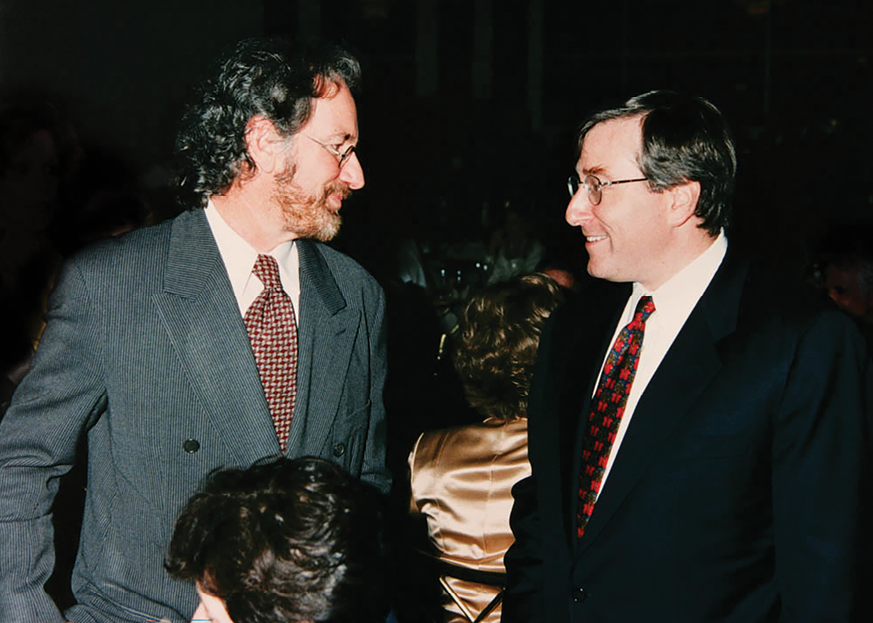
Steven Spielberg and Sandy Climan
Will you discuss your career journey?
The extraordinary adventure I have had in my career and life was an impossible thought from where I began. I grew up in the Northeast Bronx. Not a particularly nice neighborhood, but there was no way to know that at the time. It was just the world I lived in. Neither parent went to college, and both were dedicated career civil servants – my father worked for the South Bronx school district, and my mother was a clerk for the orthopedics ward at Jacobi Hospital. I could not be more grateful to the New York City public school system. I was fortunate enough to be admitted to the highly selective Bronx High School of Science, which saved me from the more dangerous high schools local to my neighborhood. The summer before I started Bronx Science, I received a letter informing me that I had been chosen for a special directed science research project. As often happens in my life, I misread the letter. The program was a year away, but I had read the letter thinking I had to find a project immediately. So, I took the Number 9 city bus down Eastchester Road to Albert Einstein College of Medicine, the private medical school affiliated with the city hospital in which my mother worked. She knew no one there, and neither did I. In 1970, there was no need for the building security we take for granted today, and I walked up to the second floor of the Medical Sciences building, down the hall, and took a left turn into the office of a bearded, bespeckled, pipe-smoking Professor William T. Norton. Professor Norton was an early pioneer in investigating the chemical structure of the myelin sheath, the protective coating around our nervous system, which is critical to the proper transmission of nerve impulses throughout our bodies. Professor Norton’s work was seminal to understanding muscular sclerosis and a host of demyelinating disorders that had crippling effect on people young and old. I have no idea how I had the temerity to ask if I could stay and work in his lab, or why he said yes. I often ponder how different life would have been had he not said “yes.”
Years of neurochemical research and graduating first in my class at Bronx Science were a ticket to pretty much any university. We did not have the resources to visit colleges, and I mainly relied on reading college guides. I think half my father’s salary and my mother’s entire salary put me through Harvard College. Harvard was a challenging and rewarding experience – a radically different world from the one I grew up in. I majored in chemistry, and there is little doubt that my involvement in the college humor magazine, The Harvard Lampoon, severely compromised my chemistry work. After three years, I had enough academic credits to graduate, but I did not want to miss my senior year and serving as Treasurer of The Lampoon. Wildly, I applied to the Harvard School of Public Health and started a two-year master’s program in health policy and management. Early negotiating experience came when I convinced the School of Public Health and the Harvard Business School to combine their master’s programs, resulting in degrees from both schools in three years rather than four. Then, as the head of production at MGM and my future boss once said in a meeting with the great actor Sidney Poitier, “Sandy joined the Circus.” I may have been the only one in my HBS graduating class not to have a job upon graduation. I had interviewed for many financial jobs in entertainment, but I wanted to work on the creative side.
Without references or relationships, I started as the secretary to a secretary at a tiny film studio funded by Guinness, the Irish brewing company. Hard work and always being ready to help others led to a fortunate series of jobs, moving to MGM motion picture distribution, then to MGM feature film production, gaining a background in television production with legendary producer David Gerber, running two small independent film studios, and finally landing where I had always wanted to work, at Creative Artists Agency. At CAA, I helped run the agency and was privileged to represent talent including Robert Redford, Robert De Niro, Kevin Costner, Danny DeVito, and directors Michael Mann and John Singleton. I co-founded and led CAA’s corporate practice, the first of its kind at any talent agency, working with Michael Ovitz to broker the sale of Columbia Pictures to Sony Corporation and the acquisition of Universal Studios by Matsushita Electric. After a series of terrible executive managements, we were recruited by French bank Credit Lyonnais to restructure my old company, MGM Studios, bringing in the brilliant Frank Mancuso and his team to revive this Hollywood icon. We created a video network partnership between three of the largest telephone companies in the United States, which was the right idea, a few years too early. It was great fun! I eventually joined Universal Studios as Executive Vice President before founding Entertainment Media Ventures 25 years ago.
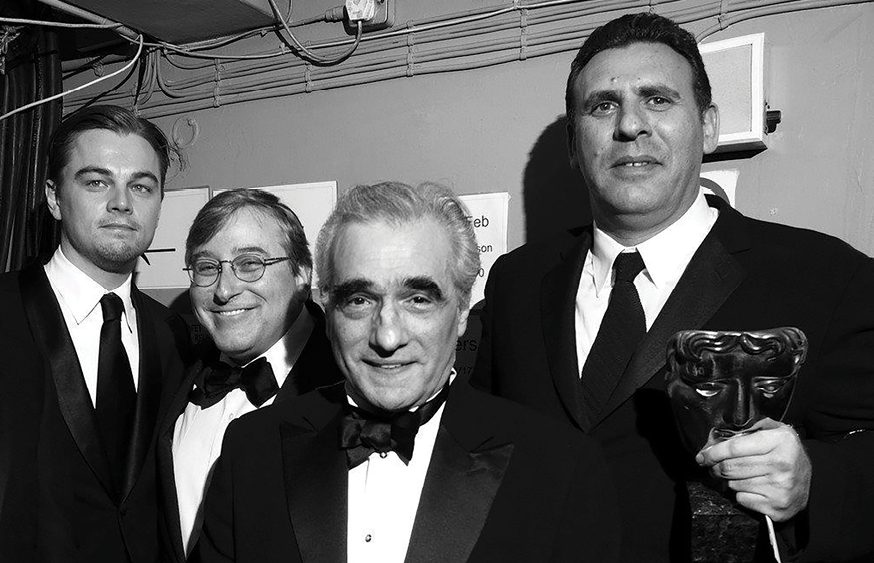
Leonardo DiCaprio, Sandy Climan, Martin Scorsese, and Graham King
What was your vision for creating EMV, and how do you define its mission?
In the mid-1990s, there was a firm conviction that CD-ROM games and storytelling heralded the beginning of interactive entertainment and the convergence of Hollywood and Silicon Valley. For the first time, venture capitalists and tech titans came knocking at Hollywood’s door. What became quickly evident was that Silicon Valley and Hollywood were very different cultures. Hollywood was a club, and the barriers to entry were personal relationships. It was tough to get past gatekeepers for young filmmakers. The Silicon Valley culture was far more open. Anyone could pitch a new idea for 15 minutes, and if the concept did not click, the venture capitalists and tech executives moved on with lightning speed. I once had the head of one of the largest tech companies in the world ask me why a studio head would call regularly with nothing substantive to say and would invite the tech executive to dinners where little was discussed. I explained that in Hollywood, people felt the need to have a personal relationship to do business, whereas in the tech industry, it was more transactional. The tech executive said that phone calls and meals did not create a relationship, shook his head, and remained a bit confused. It was soon evident that CD-ROMs were excellent games and educational tools, but not the hoped-for gateway to interactive entertainment. The venture capital and tech crowd quickly left Hollywood. Fortunately, I stayed with them and began my journey in venture capital advising and investing. My goal with EMV was to create a bridge between Hollywood and its creative industries with the worlds of technology and global business. The convergence between entertainment and technology started in earnest when the internet took off as an essential part of our daily lives. The seamless blending of technology innovation with entertainment took longer than initially predicted, but we are now feeling the full force of that convergence.
Film, television, sports, information, shopping, social media, gaming, and far more are rapidly merging into data-driven platforms that are transforming the way we work and live. Inefficient legacy marketing is being overtaken by the ability to target customers more effectively through digital media. Audiences have become addressable communities. National boundaries are disappearing as we move quickly to global platforms. Data, reach, personalization, and monetization are the new guidelines by which consumers are served. We have democratized creators’ ability to reach their audiences. It could not be a more exciting time for creative disruption and for testing new models for bringing highly engaging products to global audiences.
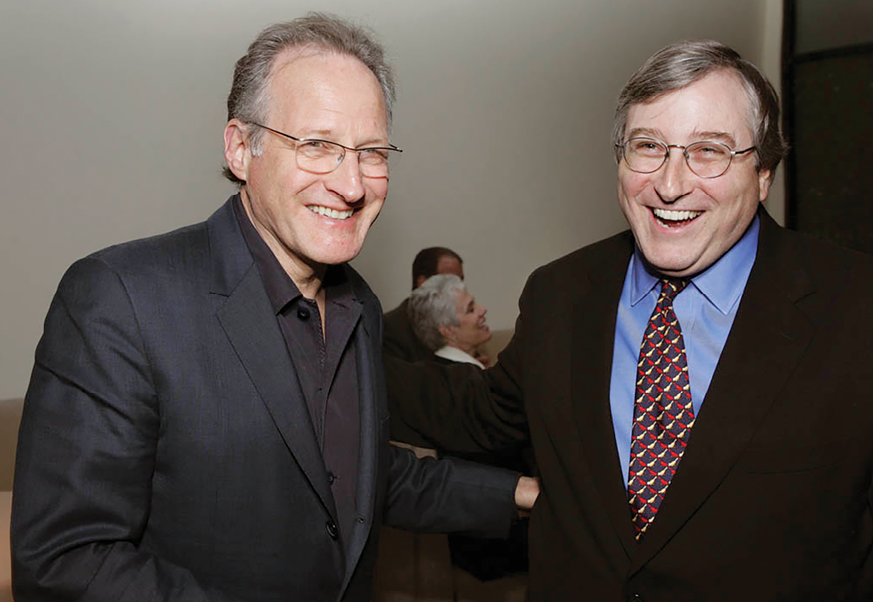
Michael Mann and Sandy Climan
Will you provide an overview of EMV’S capabilities?
It is critically important to listen well and be open to new ideas. Cross-pollinating entrepreneurs, creators, and ideas is our key to success. We are often called upon to evaluate business models and make complex technical presentations understandable to the general public. We love the art of storytelling – whether for film, television or digital media, or to help shape the narrative for both early-stage and established companies. At EMV, we strive to see opportunities where others do not, and to foster collaboration by bringing together the right human capital and businesses to supercharge growth opportunities and pioneer new markets. It is the most incredible feeling to introduce new partners to one another and to work together on strategies that create significant opportunities and value. I have been fortunate to be a media and entertainment advisor to the World Economic Forum for over 30 years. With my friend Michael Wolf, co-founder and CEO of leading consulting firm Activate, we quietly host one of the most exclusive dinners during the Davos conference, where an extraordinary cross-section of industries and people gather. Lifetime friendships and remarkable business ideas have resulted from bringing together friends and colleagues who might never have met. Nothing makes me happier than bringing together people who will enrich each other’s lives personally, with the added benefit of good business resulting from that personal connection.
What are your views on the impact of AI for the entertainment industry?
At EMV, we track scores of companies innovating in artificial intelligence. We divide them into three groups – those that help make existing businesses more efficient, those that provide new tools for creators, and AI that creates independently. AI will play an important role in film and television distribution as the entertainment industry moves from inefficient legacy marketing and distribution models to more precise audience targeting and content curation for fan-focused film communities. Much attention in Hollywood centers on the concern that AI will replace human creators. So far, the AI tools that create on their own are excellent for inexpensive production of short-form content and targeted digital advertising, but are years away from being applied to more complex production processes. That said, new AI tools are regularly being developed to assist creators in generating ideas and stories, advancing visual effects, streamlining film production and editing, and bringing to life the fantastic worlds that need to be unlocked from filmmakers’ minds. I am a true believer in the genius of human filmmakers and the spark of human creativity.
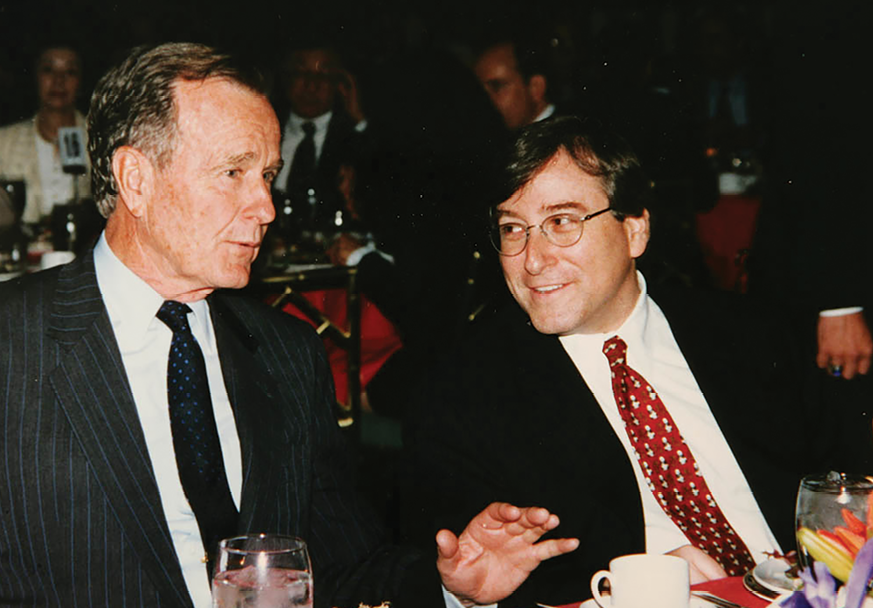
41st U.S. President George H.W. Bush and Sandy Climan
What do you feel are the keys to effective leadership, and how do you approach your management style?
The first goal of management is to listen well and think. Understanding the consumer, the audience, and the community is essential. Whether business-to-consumer, business-to-business, or business-to-government, we need to anticipate what makes our business more precise, more accurate, and faster. With the consumer in mind, what makes life easier and more enjoyable? As they say in ice hockey, “Skate to where the puck will be, not where it is now.” At EMV, we immerse ourselves across media and entertainment, technology, finance, and global culture. The best ideas often come from seemingly uncorrelated sources. Wildly diverse relationships frequently become the most impactful for business growth. Central to EMV are the fundamental values of excellence, integrity, respect, collegiality, and, dare I say it, kindness. An essential but difficult skill is to tell a client, partner, or colleague the truth in a way they can hear, enabling them to make the best decisions for their business or themselves personally. Whether as an executive, talent agent, or entrepreneur, I have always seen myself in service to people and ideas. A service mentality is a core value of our team. At EMV, we always make it clear that we are here to solve problems, large or small. We never represent or support an idea that we do not fully endorse or in which we do not have complete conviction. This may not be the most profitable approach in our highly transactional world, but it is the only way we can keep to our “true north.”

Magic Johnson and Sandy Climan
When you look to the future, what excites you the most about the entertainment industry, and what concerns you the most?
There is no doubt that we live in the most exciting time for creators. There are still legacy studio and network gatekeepers, but creative talent can entrepreneurially raise capital, produce, and find an audience, bypassing these legacy models. Audiences are now communities, and creators can find and cultivate a fanbase that can generate anything from a good living to a spectacular one. Production tools that were once expensive, often inaccessible and cumbersome, are now digital, intuitive to use, and within the economic reach of creators worldwide. EMV was early in building a global footprint, and I could not be more excited that we are now on a worldwide platform for entertainment. Hollywood has historically been an export business of U.S. productions to countries around the world. Today, some of the most successful and impactful entertainment in the U.S. and around the world comes from outside the Hollywood system. When I started in the entertainment business some 40 years ago, if there was a brilliant film not in English, it would play in one art-house movie theater in New York City and might later play in a single art-house theater in Los Angeles. Today, hundreds of millions of people watch non-English language productions without a second thought. My life and career have been built on bringing cultures together through storytelling. I believe people are essentially the same everywhere in the world, with the same hopes and dreams for their happiness and their families. We are entering the golden age of bridging cultures with storytelling. We must ensure this global platform is used to unify the world, not divide it. Social media is the “water cooler” around which we discuss entertainment and life. I worry that social media platforms find it profitable to promote anger, discontent, and division. The more we bring global storytelling to social media, with thoughtful moderation and discourse, the more we will promote the unifying bond of entertainment between people worldwide.
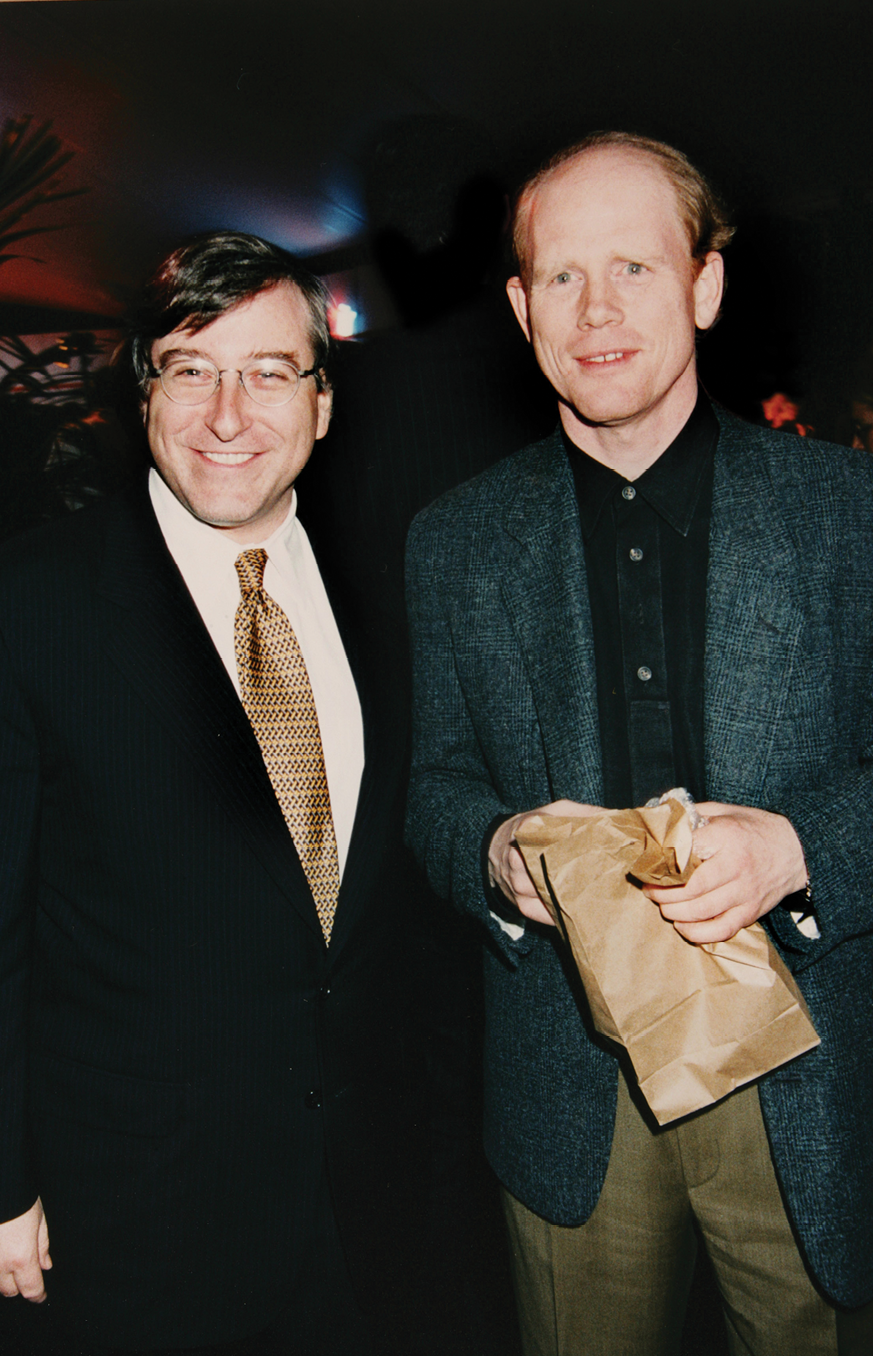
Sandy Climan and Ron Howard
Did you always know that you had an entrepreneurial spirit and desire to build your own company?
There is no question that I am an accidental entrepreneur. When I started at MGM, I thought I would be at MGM for life. I had no idea how fragile management teams could be, and how often entertainment CEOs were swept away, replaced with a new team that cleaned house when they arrived. Everybody has two businesses – their own business and show business. Being in the entertainment business opens doors across industries and around the world. The fascination with the impact of entertainment and the importance of storytelling is now central to almost every business vertical. Understanding the positive effects of storytelling and the tools of media and entertainment applied to non-entertainment companies has given the EMV team access to CEOs, government leaders, and investors worldwide. What I love about working with filmmakers, the singular vision and drive to “create” with a team that moves like a highly disciplined army, is the same spirit and excitement I experience working with early-stage entrepreneurs. Failure is not an option. And when there is failure, you get back up and start creating more and better. On a personal note, I will never retire, at least not voluntarily. Whether as a creative executive, a talent agent, or helping start or guide venture-backed companies, I have the privilege of working with visionary ideas and brilliant creative talent. Nothing is impossible. Nothing could be more rewarding. Nothing could be more fun.
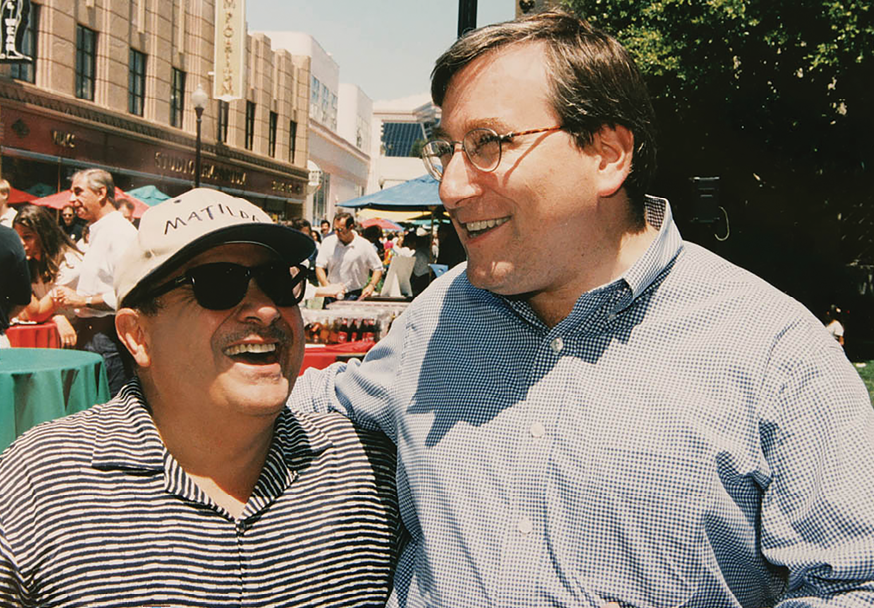
Danny DeVito and Sandy Climan
What advice do you offer to young people beginning their careers?
Recognize and embrace the power of friends and mentors. I doubt I would be giving this interview if Professor Norton had not taken me into his Neurology Department lab at Albert Einstein College of Medicine at age 14. I might never have cracked the barriers to employment in Hollywood if my college advisee, Aldo Tenaglia, had not introduced me in Boston to his friend, Canadian documentarian Tom Holmes. Tom gave me introductions to three friends in LA, of whom two were too busy to meet a young, unemployed Harvard graduate who came West with no job and no resources. The third was Sue Parker, who had worked on the earliest James Bond films and was the girlfriend of the legendary film financier Richard St. Johns, who was heading the Guinness Film Group. At Richard’s suggestion, his head of film sales and distribution, Mark Damon, hired me as his “second secretary.” I had met MGM Chief Financial Officer Jason Rabinovitz on a film study for Harvard Business School. Jay was appalled that I was a secretary and introduced me to MGM International film distribution head Jack Gordon, who hired me as his assistant and handed me the new, rapidly evolving area of pay-television to oversee. MGM film production chief David Chasman, who had never gone to college, thought it might be helpful, and amusing, to hire a Harvard grad to try to keep up with him. (I couldn’t.) At MGM, I championed the film projects of television powerhouse David Gerber at a time when television producers did not readily cross into the film world. After a regime change at MGM, David was not treated with respect by the new film head, Freddie Fields. I most certainly got in trouble advocating in a meeting with Freddie for one of David’s projects, which was later produced elsewhere. Freddie fired me, and David hired me with a higher title and more authority, keeping the same parking spot right in front of the Thalberg Building on the MGM lot. I went from a buyer of film projects to a seller of television projects, which is the difference between your phone ringing 24/7 with people trying to sell you film ideas, to a silent phone on your desk for outgoing calls to sell your own company’s projects. Going from buyer to seller was jarring and critical to my career development. While a studio executive, I became friends with agents at a newly formed talent agency, Creative Artists Agency. They often did not have the budget to screen films, so we screened them together at MGM on my corporate account. Two of those agents, actors’ agent Mike Menchel and director visionary Jack Rapke, badgered CAA founder and president Mike Ovitz to hire me. It took years for Mike to decide to take a chance on me. He never envisioned that I would represent talent, but the genius of CAA was that you could work with any talent, no matter how important, if you could gain their trust. Robert Redford, who was box-office platinum as an actor and had just won the Oscar for best director for his first directorial effort, Ordinary People, was the world’s most sought after talent. Even though Redford had never worked with anyone at CAA other than Mike, Mike trusted me to meet a reluctant Redford, and, miraculously, I gained his trust and worked directly with him for more than a decade, helping to identify, package, and launch groundbreaking studio and independent films. Mohr Davidow Ventures’ partner Jon Feiber met me at CAA, where we together did the pioneering cross-industry deal for Steven Spielberg to produce a CD-ROM on filmmaking for Bill Gross’ Knowledge Adventure series. Jon opened the world of venture investing to me, and later, Michael and Lowell Milken supported me, from whom I learned so much. Seagram executive Jeananne Hauswald introduced me to World Economic Forum founders Professor Klaus and Hilde Schwab, who saw EMV as an ally in expanding the WEF’s reach into media and entertainment. This long list of generous people changed my life, and, more importantly, became lifelong friends.
And, of course, I learn every day from my sons, Joseph and Matthew.
Of the many things one can collect in life, the most important by far is collecting good people. Selflessly. Relationships should not be transactional – no need to keep score. The value of true and lasting friendship cannot be overestimated or overvalued. Your extended family of trusted relationships is the support you need to take risks and survive the inevitable roller coaster ride ahead in your professional and personal lives. Finally, be your authentic self. It is as essential to learn what not to do from your bosses and colleagues as it is to emulate what to do. Be grounded. Pay attention to your value system. Extend a helping hand as often as you can. Listen well to everyone. Develop critical thinking. Be approachable. Practice empathy and compassion. Work hard and strive for excellence, but make time for family and friends. As you look back on your life, you will find that a wealth of relationships is the accurate measure of a life well-lived.