- Home
- Media Kit
- MediaJet
- Current Issue
- Past Issues
- Reprints (PDF)
- Photo Specifications (PDF)
- Contact Us
- PRIVACY POLICY
- TERMS OF USE
Loading

ONLINE

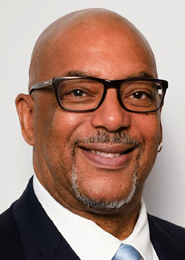
Stanley Richards
Building People,
Not Prisons
Editors’ Note
Stanley Richards is the President and Chief Executive Officer of The Fortune Society, a nationally recognized nonprofit organization dedicated to supporting successful reentry from incarceration and advancing alternatives to incarceration. A formerly incarcerated man of color, Richards brings over three decades of leadership and lived experience to his role. His career began at Fortune in 1991 as a Counselor and evolved through a series of leadership positions, culminating in his appointment as CEO in 2024. Between 2021 and 2022, he served as First Deputy Commissioner of Programs and Operations at the New York City Department of Correction, becoming the first formerly incarcerated person to hold that position. Richards’ leadership is defined by a deep commitment to equity, opportunity, and human potential. He continues to build on Fortune’s legacy of transformative advocacy and holistic support for people impacted by the criminal legal system, ensuring the organization remains a national model for justice reform and community reintegration.
Organization Brief
Founded in 1967, The Fortune Society (fortunesociety.org) has advocated on criminal justice issues for more than five decades and is nationally recognized for developing model programs that help people with criminal justice histories become assets to their communities. Fortune offers a holistic and integrated “one-stop-shopping” model of service provision. Among the services offered are discharge planning, licensed outpatient substance use and mental health treatment, alternatives to incarceration, HIV/AIDS services, career development and job retention, education, family services, drop-in services, creative arts, and supportive housing, as well as lifetime access to aftercare. Fortune has a dual mission of services and advocacy. The organization uses what it learns from its justice-impacted staff and leadership, and from the people it serves, to inform and drive its advocacy – creating systemic change while supporting individual transformation.
.png)
Stanley Richards and colleagues visit The Fortune Society’s
Sky Garden atop Castle Gardens in upper Manhattan
Will you highlight the history and evolution of The Fortune Society?
The Fortune Society began as an advocacy organization, giving voice to those affected by the criminal legal system. It was inspired by a 1967 Off-Broadway play by David Rothenberg called Fortune and Men’s Eyes, which portrayed a young man’s harrowing experience of being assaulted on his first night in prison. This powerful play sparked conversations about the realities of incarceration – something society largely ignored at the time.
Dialogue between the audience, cast members, and recently released individuals emerged, prompting David to create The Fortune Society. He was struck by the immense harm inflicted by incarceration and the harsh conditions prisoners faced. He wanted to be part of a movement that amplified those voices and experiences to inspire societal change.
From the start, Fortune focused on addressing the needs of people returning home – helping them find employment, housing, and maintain recovery – needs that remain unchanged today. And from there, the organization grew.
What role do you feel The Fortune Society plays in today’s environment?
We fulfill several critical roles. First, we act as a safety net for people coming home from incarceration. Our “no wrong door” service delivery model spans 16 program areas, serving over 18,000 people annually, with 6,000 new clients walking through our doors each year. About 25 percent are unstably housed. We also see the challenges inside jails like Rikers, where half the population has some mental health diagnosis and over 21 percent have serious mental illness. We support people in rebuilding their lives post-release. Secondly, we work to shrink the “front door” of the justice system by diverting people from incarceration through alternatives like supervised release, transitional housing, and court-based navigator programs. We aim to intervene early and offer people a chance to build stable lives before they become trapped in the cycle of incarceration. Lastly, we advocate for systemic change. We know that services alone can’t solve mass incarceration, especially as it disproportionately impacts Black and Brown communities. We focus on healing trauma, safe diversion, and pushing for policy reforms that break the persistent cycles of incarceration, homelessness, addiction, and mental illness.
The Fortune Society’s motto is “building people, not prisons.” What does this mean to you?
It’s about seeing the best in people, even when they can’t see it themselves – and holding that vision for them until they begin to believe it and live it. It means not judging individuals by their crimes or the time they’ve served. We don’t determine guilt or innocence. Instead, when someone walks through our door, we ask: Who do you want to be? What do you want to achieve? How can we support you in getting there?
Our open-door policy welcomes anyone – whether newly released or home for years – to receive counseling, resources, and community support. When people secure jobs, stable housing, and rebuild their lives, that is true public safety and community building. It helps them envision better futures for themselves and their families.
“Stanley is an exceptional CEO who is capable of leading with both passion and a clear strategic vision. He brings compassion to our mission combined with a no-nonsense approach to his leadership responsibilities that keeps the organization on track and continuously expanding our reach.”
L. Dennis Kozlowski,
Chairman, The Fortune Society
How has your background shaped your vision for leading the organization?
My background is deeply connected to this work. As someone who was formerly incarcerated and caught in cycles of incarceration, addiction, and hopelessness, I once believed my only options were jail, the streets, or drugs. But during my last incarceration, I broke the cycle through education – earning my GED, going to college, and graduating. I realized life wasn’t about false choices; I could build a better future and contribute positively to my community and city. When I came home, I dedicated myself to helping others impacted by the criminal legal system see that they don’t have to live that limited life.
Leading The Fortune Society is my way of paying forward the transformation I experienced. I’m grateful to lead an organization that helps people see the best in themselves and become valued members of their communities. Lived experience seems very important in your role.
Will you discuss the qualities it takes to lead a nonprofit like Fortune today?
Leading with trust is essential. Both the team and leadership must be grounded in trust. You also need hope – the belief that change is possible, even if it’s not immediate or easy. There will be tough days ahead, but progress is real. For example, when I was incarcerated, New York State had 72,000 people in prisons; today, that number is down to 31,000. New York City jails held 22,000 people; now, just over 7,000 in a city of 8.5 million. The number cycling through jails was 100,000; now, it’s much less. That progress is a foundation of hope.
It’s equally important to lift up those working in this field and those striving for better lives. Many choose to believe life can improve – that belief is the seed for change. These elements enable me to lead in a way that empowers both colleagues and the people we serve.
What would you say is the key to The Fortune Society’s growth and impact?
Our growth stems from listening and responding directly to the needs of the people we serve. Fortune’s expansion has been organic – we entered housing because more people became homeless and couldn’t sustain employment without stable housing. We opened our first housing program, Fortune Academy, and now house over a thousand people nightly, with two new housing development projects slated to open in 2026.
We also added mental health and substance abuse programs because referrals alone weren’t enough; direct service is necessary to keep people connected. Our alternatives to incarceration programs expanded to safely divert people from the justice system.
This organic growth has created multiple entry points and a lifetime of aftercare commitment, allowing us to leverage diverse funding sources for greater impact – whether rebuilding lives or preventing incarceration.
How critical are corporate and foundation partners in expanding Fortune’s services?
We simply couldn’t do this work without their partnership. Serving 18,000 people yearly, many with multiple challenges, requires diverse resources. Government funding is wonderful but often targeted to specific problems or timelines. For instance, employment funding may cover only those released in the past six months, leaving out those released a year ago. Foundations offer critical flexibility to serve the whole person, regardless of issue or timing. While they don’t replace government funding, foundation partners enable nimble, holistic service delivery. We deeply appreciate their role.
How valuable is it to have such an engaged and committed board?
Our board has grown significantly and become very active in supporting our work. We have an exceptional chair who understands our mission and dedicated members who contribute skills and resources to ensure Fortune’s long-term sustainability. Board members participate in multiple committees and clearly distinguish their roles from management. I’m grateful for their commitment.
How critical are metrics to measure Fortune’s impact?
Metrics are absolutely critical. We track outcomes for every program to ensure quality and value. We measure workshop completions, job placements and salaries, alternatives to incarceration completions, and cost savings. We monitor housing retention and transitions to permanent housing or family reunification, as well as drug treatment completion rates. These outcomes are shared annually with partners, government agencies, foundations, and the public on our website.
What are your priorities for The Fortune Society?
When I took the role, I laid out four pillars. First is people-first leadership – caring for the staff who do the daily work. We strive to pay market-competitive salaries, provide quality benefits, add personal days, and are creating a wellness center with meditation rooms, lounges, and workout space. When staff are cared for, they care for others. Second, we focus on building program excellence – our models are replicated elsewhere, and we share expertise nationally. Third, we plan to expand research and advocacy through public policy and social justice centers to increase system-wide impact. Fourth, we want to broaden our umbrella to invite social justice advocates and community members to join as volunteers, donors, and partners. We aim to expand our tent to include all who care about community well-being and true public safety.
What is one piece of advice on leadership from your experience?
Leadership isn’t about a title; it’s about action. It’s how you show up every day – with inclusion in decision-making, clarity on accountability and responsibility, and behavior that reflects how you would want your leader to be. Leadership is about consistent action, not perfection.