- Home
- Media Kit
- MediaJet
- Current Issue
- Past Issues
- Reprints (PDF)
- Photo Specifications (PDF)
- Contact Us
- PRIVACY POLICY
- TERMS OF USE
Loading

ONLINE

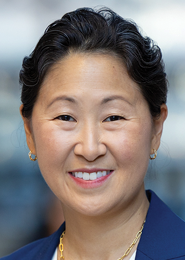
Amanda J. Rhee
Clinical Excellence
Editors’ Note
Dr. Amanda Rhee was appointed System Vice President of Perioperative and Procedural Services for the Mount Sinai Health System in January 2025. In this role, she leads systemwide clinical and operational efforts for procedures including patient and staff safety and experience, efficiency, quality, clinical standardization, risk mitigation, regulatory readiness, and malpractice. Rhee works with a multidisciplinary team of stakeholders including nurses, physicians, and other system leaders and experts. During her time at Mount Sinai, she has led numerous hospital and system-based committees including System Clinical Operations for Procedures (SCOPE), the System Operations Quality and Regulatory Committee, the System Patient Safety Indicator Improvement Committee, and the System Care Standardization Committee. She created and continues to lead the annual Operating Room and Procedural Safety Summit for staff, entering its tenth year. During the pandemic, she led clinical operations for Mount Sinai’s Central Park tents and offsite locations. Rhee is a Professor of Anesthesiology, Perioperative and Pain Medicine at the Icahn School of Medicine at Mount Sinai. She has published more than 75 papers and book chapters and has given more than 100 presentations around the world. She has chaired and served on various boards and committees for scientific journals and societies such as the American Society of Anesthesiologists, the Society of Thoracic Surgeons, and the Society of Cardiovascular Anesthesiologists, where she is chair of the Quality, Safety and Value Committee. Rhee received her MD from Tufts University School of Medicine and her Master of Science in Healthcare Delivery Leadership at Icahn Mount Sinai. She completed her residency training in anesthesiology at Montefiore Medical Center in the Bronx, followed by a cardiothoracic anesthesiology fellowship at The Mount Sinai Hospital, where she earned the Award for Excellence in Research as a Fellow and won the Kaplan Leadership Grant for Professional Development.
Institution Brief
Mount Sinai Health System (mountsinai.org) encompasses the Icahn School of Medicine at Mount Sinai and seven hospitals, as well as a large and expanding ambulatory care network. The seven hospitals – The Mount Sinai Hospital, Mount Sinai Brooklyn, Mount Sinai Queens, Mount Sinai Morningside, Mount Sinai South Nassau, Mount Sinai West, and New York Eye and Ear Infirmary of Mount Sinai – have a vast geographic footprint throughout the New York metropolitan region. The Mount Sinai Hospital has been listed in the U.S. News & World Report Honor Roll for the last ten years. The New York Eye and Ear Infirmary of Mount Sinai is also ranked nationally in ophthalmology.

Mount Sinai Health System on Manhattan’s Upper East Side
Will you discuss your career journey?
I began my journey thinking I was going to be a surgeon and although I miss surgery, I’ve never regretted switching to anesthesiology. As someone who likes fast-paced, high-acuity environments, I found my place in cardiothoracic anesthesiology and completed my fellowship at Mount Sinai 15 years ago. I am now a Professor of Anesthesiology, Perioperative, and Pain Medicine having decided to pursue the clinician educator promotional track because I value academia and education. Parallel to my clinical work, I’ve always been drawn to the idea of building systems and processes that would make the care we deliver safer, more efficient, and with a better experience for patients and staff. This is why over the past decade I’ve been working on quality improvement using LEAN and six sigma processes and a data-driven approach. This has led to my current role serving as the System Vice President of Perioperative and Procedural Services for the Mount Sinai Health System.
How do you describe Mount Sinai Health System’s culture and values?
I’ve known Mount Sinai to be a place for opportunity where there is a place for people who want to work with others to make a difference. I think folks want to do the right thing for patients and staff and truly aim to have Sinai be the best place to receive care for everyone in the way they need it. Even in the relatively short 15 years I’ve been here, I see improvements yet know that we still have much work to do. I like that we are becoming more connected throughout the system and new leadership has brought fresh perspectives to the landscape.
What have been the keys to Mount Sinai Health Systems’ industry leadership, and how do you define the Mount Sinai difference?
Mount Sinai is clinical team led and we are industry leaders in research and clinical excellence. I think strengths of the organization are agility, teamwork and resilience. We have the ability to band together both in emergencies and on the day to day to help one another get the job done. In my opinion, this is the root of our success. I see my job as connecting with teams to optimize care processes for patients and staff to make the experience for both safe and seamless.
“We are leaning into AI to better help us capture accurate data to drive analytics, analyze complex processes on a large scale, create predictions to help us manage operations, and communicate better with patients.”
Will you provide an overview of your role and areas of focus?
I am responsible for the main operating rooms and endoscopy suites throughout Mount Sinai Health System. This includes 174 ORs and 20 endoscopy rooms where over 2,000 perioperative staff members work with anesthesiology and surgical teams and beyond to take care of over 125,000 patients every year. It is a privilege to serve in this role for our patients and organization.
How are AI, machine learning, and large-scale data impacting your work?
We utilize process improvement methodologies to organize and approach the work. I think this is essential to creating sustainable change. Data and dashboards are an inherent part of the work leveraging run charts, control charts, pareto charts and other process improvement tools to understand where we are and whether our interventions are working so we accelerate and scale the work or make adjustments to meet our system-aligned targets. We are leaning into AI to better help us capture accurate data to drive analytics, analyze complex processes on a large scale, create predictions to help us manage operations, and communicate better with patients.
Do you feel that there are strong opportunities for women in leadership roles in the industry?
I think the opportunities are growing, but it is important for women and all growing leaders, especially those folks who may not feel like they would typically have a place in leadership, to proactively create their own space. Seeking trusted mentors, learning how to advocate for yourself, and not being afraid to ask for or take opportunities when they present are keys to vertical growth. We must also deliberately support upcoming leaders to give them these opportunities to lead and show what they can do. Our new System Perioperative Leadership Team is comprised of both seasoned and new leaders, some given roles of this magnitude for the first time. It is important to support talent from many different perspectives.
Did you know at an early age that you had a passion to pursue a career in medicine, and what has made the profession so special for you?
My father and my grandfather were both physicians. My sister and I would visit the hospital with my dad who was a vascular surgeon and I saw all that he and his team did to help people. My sister and I knew we wanted to be doctors from an early age. He used to treat patients for free if they couldn’t pay and won teaching awards from his residents. My father is an amazing person and an inspiration to us both.
What advice do you offer to young people beginning their careers?
Work hard, be kind to people, and do the right thing. Relationships and teamwork are at the heart of any successful endeavor. Don’t be afraid to create opportunities for yourself by asking for them, and if you get the chance to step into a role you feel you might not be ready to take yet, take it. No one feels ready and completely prepared. You can do it.