- Home
- Media Kit
- MediaJet
- Current Issue
- Past Issues
- Reprints (PDF)
- Photo Specifications (PDF)
- Contact Us
- PRIVACY POLICY
- TERMS OF USE
Loading

ONLINE

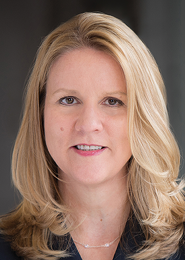
Catherine C. Skae
The Clinical Learning Environment
Editors’ Note
Dr. Catherine Skae is responsible for the Graduate Medical Education (GME) program which includes more than 1,600 interns, residents, fellows, and students in more than 125 training programs. In addition, she serves as the Designated Institutional Official for the Accreditation Council for Graduate Medical Education (ACGME), the international organization that accredits medical training programs. For the past six years, she has also been the Principal Investigator on an AMA Reimagining Residency Grant implementing and studying a curriculum on social determinants of health across Pediatrics, Internal Medicine, Obstetrics and Gynecology and Women’s Health, and Family Medicine. Skae serves on numerous medical center and medical school committees to bring her unique perspectives of Health Systems Science at the intersection of GME and institutional objectives. Most recently, she was promoted to Professor of Pediatrics, the highest academic rank a faculty member can achieve that reflects accomplishments in teaching, clinical care, scholarly activities, and community service. Skae has been the recipient of numerous awards including the Dr. Cyrenius Chapin Award for Outstanding Performance in Achievement in Clinical Sciences from the SUNY at Buffalo School of Medicine and Biomedical Sciences; St. Thomas Aquinas College Alumni Hall of Fame Award; Leo M. Davidoff Society of the Albert Einstein College of Medicine Inductee; Lewis M. Fraad, MD, House Staff Teaching Award, Dept. of Pediatrics, Children’s Hospital at Montefiore; and Alpha Omega Alpha (AOA) National Honor Society.
Institution Brief
Montefiore Einstein (montefioreeinstein.org) is a premier academic health system renowned for pushing the boundaries in every arena, from research to discoveries of life-saving cures, from innovations in patient care to advancements in public health, and to world-class medical education. It is comprised of Montefiore Health System and Albert Einstein College of Medicine. Together they are pioneering patient-centered research and providing exceptional personalized care with over six million patient interactions a year in communities across the Bronx, Westchester and the Hudson Valley. Montefiore Health System is comprised of 10 member hospitals, including the Children’s Hospital at Montefiore, Burke Rehabilitation Hospital, White Plains Hospital, and more than 200 outpatient ambulatory care sites that provide coordinated, comprehensive care to patients and their families. Albert Einstein College of Medicine, home to nearly 1,000 students in its MD, PhD, and combined MD/PhD programs, is one of the nation’s preeminent centers for research, medical education and clinical investigation.
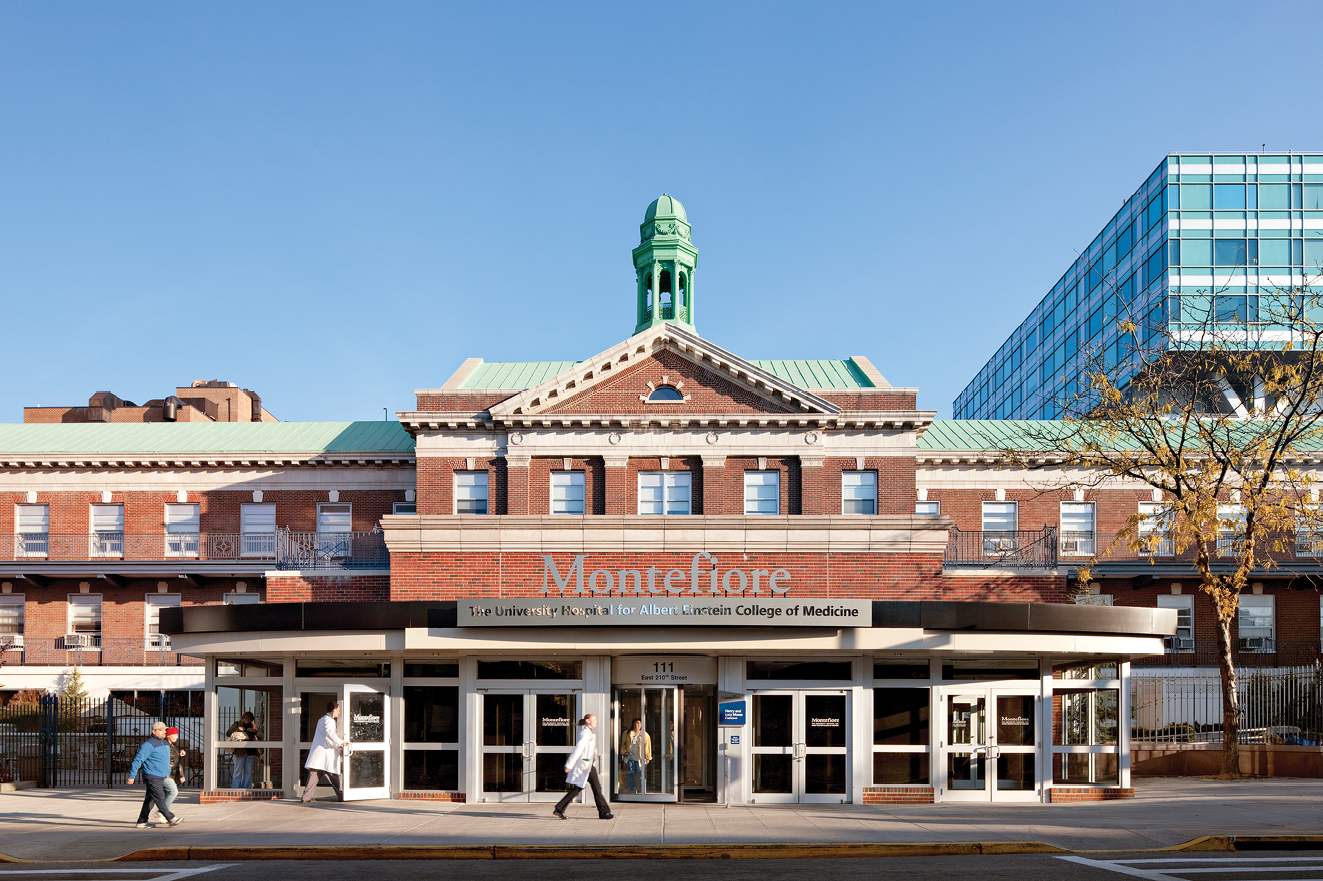
Montefiore Health System’s Henry & Lucy Moses Division
Will you highlight your career journey?
As I look back, I believe my calling to medicine started in childhood. I was drawn to helping people and caring for the sick. The circumstances that shaped me years ago included growing up in a home with both my maternal and paternal grandparents and visiting my dear mother when she was a patient at Memorial Sloan Kettering and Rosary Hill Hospice. I did something novel in high school when I started taking college courses the summer after my freshman year. My intent was to obtain a year or two of college credits before graduating from high school, but I had started early enough that I met all of the requirements to graduate from the Academy of the Holy Angels high school and St. Thomas Aquinas College one day apart at 17-years-old. It was an exciting time. Media coverage of my accomplishment appeared in newspapers, on the radio, and on television with appearances on The Today Show and even on The Tonight Show with Johnny Carson. Then, I went on to Columbia University’s School of General Studies to take upper-level science courses followed by a clinical research position at New York Hospital-Cornell University Medical Center.
I then headed to Jacobs School of Medicine and Biomedical Sciences, where I fell in love with Pediatrics as a third-year medical student. On elective during my fourth year, I watched in awe as pediatricians cared for a baby with a life-threatening heart dysrhythmia. I asked my preceptor where the doctors trained, and he said Montefiore Einstein (he did too). So, it came to be that I arrived at Montefiore Einstein 28 years ago as a pediatric intern. Throughout my Pediatrics Residency and Chief Residency, I thoroughly enjoyed many responsibilities, but I enjoyed teaching the most. I went on to serve as the Assistant to the Chief of Service in Pediatrics the year we moved into the new Children’s Hospital at Montefiore in 2001, followed by Residency Program Director and Vice Chair for Education. I was then asked to do what I had done for the Department of Pediatrics on the institutional level which brought me to Vice President and Associate Dean and now Senior Vice President and Senior Associate Dean for Graduate Medical Education.
Montefiore’s training program is one of the largest in the country. Will you provide an overview of Graduate Medical Education at Montefiore Einstein?
With 102 residency and fellowship programs accredited by the ACGME (four new applications pending), we are in the top 3 percent of largest sponsoring institutions in the U.S. We also have a large dental education program with five programs accredited by the Commission on Dental Accreditation, two Podiatry residencies accredited by the Council on Podiatric Medical Education, and more learners in Psychology, a Physician Assistant Residency program, and Medical Physicists. The entire program includes more than 1,600 trainees. In addition, I enjoy working with Montefiore affiliates as we have added new partners in Westchester, Rockland, Orange, and now Sullivan County. Our GME Community includes hundreds of people responsible for the programs, teaching, and oversight. Program Directors, Associate Program Directors, Program Coordinators, and faculty are integral to the process. We have an active Graduate Medical Education Committee with Subcommittees on the Clinical Learning Environment, Well-Being, and Non-Standard Training Programs. We adhere to thousands of regulations to ensure that all requirements for first-class training are met. These requirements are constantly changing and evolving so that requires us to do the same. I have spent and continue to spend time on efforts working on committees for Albert Einstein College of Medicine as well: the Executive Education Council, LCME Subcommittees, Committee on Student Promotions and Professional Standards, Committee on Promotions to Associate Professor, and numerous search committees.
In 2019, we began a collaboration with the University of Mt. St. Vincent in close by Riverdale, New York, to provide clinical rotations for their new PA Program. After years of planning and development, the inaugural class graduated in January 2025, and 16 Physician Assistants were hired into our system. That number more than tripled our initial goal. My New House Staff Orientation and Graduations include the slide, “Made in the Bronx.” Montefiore Einstein is an amazing place to train. The transformative period of learning during residencies and fellowships is pivotal. It is so rewarding to see our trainees thrive and then graduate, going on to incredible positions and bringing honor to their alma mater.
What are your areas of focus and how do they reflect the missions of Montefiore and Albert Einstein College of Medicine?
Montefiore’s mission is to heal, teach, discover, and advance the health of the communities we serve. I carry this mission out within our educational efforts. It is all intimately intertwined. The clinical learning environment is of the utmost importance to me as attention is always on patient safety, quality improvement, and patient satisfaction – ultimately, everything we do is about our patients.
I have had the privilege to watch advancements in science, patient care, administration, the game-changing implementation of the EPIC electronic medical record across all of our care settings, and countless other projects aimed at improving access to care, communication, and overall, patient care. Similarly, at Einstein, we combine humanistic care with research excellence to prepare medical students and graduate students to become compassionate physicians and innovative scientific investigators. I strive to contribute in meaningful ways to all of these pursuits of excellence.
How is the residency program evolving to better address the workplace needs of the current and future healthcare system?
Montefiore GME has been addressing the workplace needs of our current and future healthcare system for years with changing rotations, curricula, foci on important disease processes as well as prevention and mental health. As part of its Next Accreditation System, the ACGME prioritized the Clinical Learning Environment with a national focus on patient safety, healthcare quality, transitions of care, supervision, duty hours, fatigue management and mitigation, professionalism, and well-being. GMEC, resident and fellow representatives, Program Directors, Associate Program Directors, Program Coordinators, Patient Safety, Quality, Performance Improvement, the Clinical Learning Environment Subcommittee, the Well-being Subcommittee, the Office of GME, and the House Staff Office come together regularly to address these priorities. Thus far, we have had two outstanding institutional site visits involving teams of site visitors, Montefiore and Einstein Senior Leadership and hundreds of Montefiore associates representing different constituents. Most recently, we are concentrating on Social Determinants of Health as well as nutrition and AI to further our learners’ knowledge and understanding.
Montefiore Einstein has been a recipient of the Reimagining Residency grant program. Will you highlight the importance of this program and how it is supporting both residents as well as different hospital and healthcare specialties?
I have been honored to serve as the Principal Investigator for our AMA Reimagining Residency Program for the past six years. The grant was entitled, Residency Training to Effectively Address Social Determinants of Health: Applying a Curricular Framework Across Four Primary Care Specialties. Health outcomes can only be improved when we study and address structural barriers that can impede health, for example, inadequate access to healthcare transportation or unstable or insufficient living conditions. This area is understudied, but at Montefiore Einstein we have incredible data on social determinants of health (SDOH) and have been a pioneer in both research in this area and developing novel resources like our Community Health Worker Institute, directed by my colleague, Dr. Kevin Fiori. This institute has served more than 15,000 Bronx households – that’s enough people to fill up Yankee Stadium.
To help support novel services like our Community Health Worker Institute and ensure our workforce is attuned to the challenges our patients face, we have developed, implemented, and are in the process of evaluating a multi-pronged curriculum on social determinants of health. We created a Steering Committee, Operations Committee, Curriculum Committee, Evaluations Committee, and Microgrant Review Committee. Grant funding directly supported faculty, administrative support, and financial support distributed across our Internal Medicine, Pediatrics, Family and Social Medicine, and Ob/Gyn and Women’s Health residencies to aid in the mission of educating faculty and trainees about health equity.
We also created and disseminated surveys about baseline knowledge, attitudes, and skills regarding SDOH in addition to a well-being component to monitor trainees over time. We published two manuscripts with our colleagues at Penn State (on systems-based practice and health system science) and Maine Medical Center (on interprofessional teaming) in the Journal of Graduate Medical Education. In addition, we established a microgrant program to fund related research by faculty and house staff. This resulted in more than 30 projects completed by faculty and house staff on SDOH and related topics that led to abstracts, papers, and presentations on the national level.
“Montefiore’s mission is to heal, teach, discover, and advance the health of the communities we serve. I carry this mission out within our educational efforts. It is all intimately intertwined. The clinical learning environment is of the utmost importance to me as attention is always on patient safety, quality improvement, and patient satisfaction – ultimately, everything we do is about our patients.”
You direct the Touched by Carolyn Program at Children’s Hospital at Montefiore (CHAM). What was the vision for this program and what has been its impact?
This program was inspired by the life of Carolyn Sullivan, an 8-year-old patient at CHAM back in 2009, whose teachers and fellow students tape recorded messages she could listen to while undergoing radiation therapy. Music helps during stressful treatments and prolonged hospital stays. When Carolyn succumbed to the brain tumor that took her life, her family asked people to donate funds to this program by which iTouches are gifted to children undergoing radiation therapy. There were fundraisers in New York and beyond. Referrals come from child life, nursing, and house staff. We then expanded the program to gift iTouches to children undergoing heart transplants through the generosity of the Max and Evelyn Fox Foundation. Hundreds of children at CHAM and throughout the nation have benefitted from the program.
Working across both the adult and Children’s Hospital at Montefiore, you are exposed to so many different specialties and people at various roles. What is your approach to mentorship and views on how teaching may be different when working with colleagues serving in adult, pediatric, or both populations?
The ages, the disease entities, the family members, the preventive care, management, and treatments are different. Science and discovery change. The approaches to teamwork, comprehensive care, with attention to social needs, excellent medical knowledge, interpersonal and communication skills, systems-based practice, practice-based learning and improvement, and professionalism are all the same. The provision of the best care possible and compassion are the same. The humanistic, holistic, sensitive approach to all patients and families is the same. Educating the next generation of physicians, dentists, podiatrists, psychologists, and PA’s requires attention to life-long learning.
Every year, before they enter programs in July, I ask 500 new interns, residents, and fellows across Montefiore to read Compassionomics: The Revolutionary Scientific Evidence That Caring Makes a Difference by Mazzarelli and Trzeciak. This book is enlightening and informative, providing scientific insights into the power of compassion in healthcare. It is an important reminder of the impact we can have on our patients, communities, and each other.
Do you feel that there are strong opportunities for women in leadership roles across the healthcare industry?
I do believe that there are strong opportunities for women in leadership roles across the healthcare industry that have improved over time. The national data shows gaps for women in leadership roles, but it is incumbent on us all to continue to provide guidance to our junior colleagues. I have been so fortunate to watch the career trajectory of our Montefiore Einstein President and CEO, Dr. Philip Ozuah, for decades as well as benefit from his mentorship. His unbridled, unfettered pursuit of excellence is unparalleled. In addition, I have loved participating in Einstein seminars for Women in Medicine and American Medical Women’s Association (AMWA) meetings.
I chair a Committee on Recruitment and Retention for the health system and have learned more about job sharing here and continue to be a huge proponent of this system for women with younger children. I also learn so much from the Physician Moms Group on Facebook started by Dr. Hala Sabry, an amazing Emergency Medicine physician. PMG is an international group of more than 120,000 women that fosters camaraderie, help, advice, collaboration, and continuing medical education. I love reading posts from Montefiore Einstein alums who make us proud.
What advice do you offer to young people interested in pursuing a career in medicine?
I have a huge poster in my office that reads: Live What You Love. Medicine requires a lot from us. The path is too long and too hard if you don’t absolutely love it – collaboration helps. I often tell my colleagues to be good listeners – to their patients, colleagues and team members – you never know where great ideas will come from or who some of your greatest supporters will be. This goes hand in hand with the “Golden Rule” – treat others the way you wish or you would want your loved ones to be treated. Lastly, whether in medicine or beyond, I recommend fostering your commitment to lifelong learning in concrete, demonstrable ways. Approximately 30 years ago, I worked with a nurse practitioner, Wanda See, DNP, who would say, “Every day is a school day.” I repeat this mantra regularly whenever I learn something new, teach others, or hear about a contribution to medicine by a Montefiore Einstein alum.