- Home
- Media Kit
- MediaJet
- Current Issue
- Past Issues
- Reprints (PDF)
- Photo Specifications (PDF)
- Contact Us
- PRIVACY POLICY
- TERMS OF USE
Loading

ONLINE

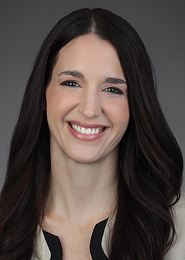
Jenny Waltzer
Advancing Oncology Care
Editors’ Note
Jenny Waltzer has more than 17 years of experience in oncology and healthcare administration, most recently serving as Vice President, Hematology and Oncology, Infusion and Surgical Oncology Service Line at Mount Sinai Health System in New York. Throughout her career at Mount Sinai, Waltzer oversaw the surgical services, infusion and other oncology services across the system’s eight hospitals. Her responsibilities included strategic, financial, operational and personnel management, handling a budget of $420 million for all cancer and infusion programs, and driving the financial health of the service line. In addition, Waltzer was instrumental in launching several critical initiatives. She played a key role in the design and implementation of the Tisch Cancer Hospital’s five-year rollout plan, which includes a new 24/7 oncology immediate care center. She also successfully launched a Plasmapheresis Collection Center and Monoclonal Antibody Infusion Center during the COVID-19 pandemic. Prior to her tenure at Mount Sinai, Waltzer held significant roles at Northwell Health’s Manhattan Eye, Ear & Throat Hospital, Weill Cornell Medicine, and Memorial Sloan Kettering Cancer Center. Waltzer holds a BA degree in psychology with a minor in education from the University of Massachusetts Amherst and a Master of Arts degree in psychology from Hunter College.
Organization Brief
Baptist Health South Florida (baptisthealth.net) is the largest healthcare organization in the region with 12 hospitals, more than 29,000 employees, 4,500 physicians and 200 outpatient centers, urgent care facilities and physician practices spanning across Florida’s Miami-Dade, Monroe, Broward, and Palm Beach counties. Baptist Health has internationally renowned institutes specializing in cancer care, brain and spine care, heart and vascular care, and orthopedic care. In addition, it includes Baptist Health Medical Group; Baptist Health Quality Network; and the Baptist Health PineApp, a virtual health platform. Baptist Health South Florida is an academic and clinical affiliate of Florida International University. A not-for-profit organization supported by philanthropy and committed to its charitable mission of medical excellence, Baptist Health has been recognized by Fortune as one of the 100 Best Companies to Work For in America and is the most awarded healthcare system in South Florida by U.S. News & World Report.
Will you discuss your career journey?
Over the past 19 years I have held leadership roles focused on oncology and service-line operations, most recently as Vice President of Hematology and Oncology, Infusion and Surgical Oncology Service Line at the Mount Sinai Health System in New York. I oversaw infusion, medical oncology and surgical oncology services across eight hospitals, managed a service-line budget of approximately $420 million, and led strategic, financial, operational and personnel initiatives. Prior to that, I held roles at organizations including Northwell Health’s Manhattan Eye, Ear & Throat Hospital; Weill Cornell Medicine; and Memorial Sloan Kettering Cancer Center. These experiences shaped my operational mindset, the importance of multidisciplinary collaboration, innovation in care delivery, and leading through both growth and challenging times. Now, at Baptist Health Cancer Care, I’m excited to bring that experience to advancing oncology care for patients in South Florida and beyond.
What excited you about the opportunity to join Baptist Health and made you feel it was the right fit?
Joining Baptist Health felt like a natural fit for several reasons. First, the organization’s commitment to providing high-quality cancer care – and to being a leader in oncology in South Florida – really resonated with me. Second, the role offered the opportunity to apply my background in operational leadership toward a dynamic and growing cancer-care system in a region with strong growth potential. Third, the culture and reputation of Baptist Health as a large, high-performing nonprofit healthcare organization in South Florida was attractive. The idea of joining a system where I could help build and scale innovative care delivery programs for oncology in a meaningful way excited me.
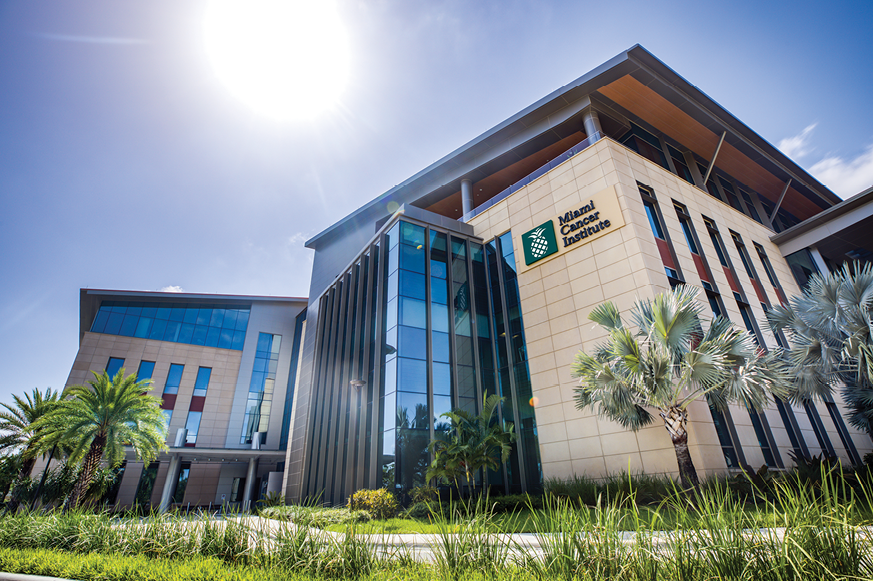
Miami Cancer Institute
Will you provide an overview of your role and areas of focus?
As Chief Operating Officer of Baptist Health Cancer Care, my role is to provide leadership and oversight for the operational, financial and strategic performance of our two cancer institutes – Miami Cancer Institute and the Eugene M. & Christine E. Lynn Cancer Institute. Key areas of focus include ensuring operational excellence across all oncology service lines; driving growth in volume, quality and patient experience; and collaborating with clinical leadership, research leadership and administrative teams to integrate multidisciplinary care, improve outcomes, and adopt innovation in diagnostics and treatment.
Will you highlight Baptist Health Cancer Care, and how you define its mission?
Baptist Health Cancer Care is a comprehensive oncology enterprise within Baptist Health South Florida, encompassing Miami Cancer Institute and Lynn Cancer Institute. These institutes serve as centers of excellence committed to providing state-of-the-art cancer care, grounded in innovation, multidisciplinary collaboration, and patient-centric service.
What have been the keys to Baptist Health Cancer Care‘s industry leadership?
In my opinion, several factors contribute to Baptist Health’s industry leadership:
• Multidisciplinary integration: Miami Cancer Institute and Lynn Cancer Institute bring together surgical oncology, hematology/oncology, radiation oncology, infusion therapy, supportive care and research – enabling coordinated, patient-centered pathways.
• Strategic growth and innovation: The ability to plan, build, and expand oncology services to meet demand and invest in new programs.
• Operational excellence: Strong leadership in operations, finance and service-line management enable the system to perform at a high level, manage complexity, and deliver consistent results.
• Community service and access: As part of a mission-driven organization in South Florida, the institutes are positioned to serve their community, adapt to local needs and ensure access for patients throughout the region.
_(1).png)
Eugene M. & Christine E. Lynn Cancer Institute
at Boca Raton Regional Hospital
How important is it for Baptist Health Cancer Care to provide collaborative care?
Collaboration is critical in healthcare. In cancer care specifically, no one discipline can operate in isolation – whether it’s surgery, medical oncology, radiation oncology, infusion therapy, supportive services, research or patient navigation. Delivering optimal outcomes requires coordinated, seamless work across all of these. At Baptist Health, fostering multidisciplinary collaboration is key to our business model. Working collaboratively ensures that care is patient-centered and avoids fragmentation. It also ensures that the patient journey is streamlined and efficient, from diagnosis to treatment to survivorship or supportive care.
What do you feel are the keys to effective leadership, and how do you approach your management style?
• Empathy and support: Recognizing that all teams are made up of people with individual and unique aspirations, challenges, and wellness needs. My background in psychology helps me lead with empathy, understanding both staff and patient perspectives.
• Accountability and empowerment: Holding clear expectations for performance and outcomes, while also empowering teams and leaders with the resources, autonomy and trust to deliver on goals.
• Adaptability and innovation: In healthcare – oncology in particular – change is constant. Leaders must embrace innovation, learn continuously, and adapt strategies accordingly.
• Collaboration and humility: Understanding that no single leader has all the answers, and that the best results come through collective effort, listening to frontline teams, and remaining open to input.
As for my management style, I see myself as collaborative, results-oriented and people-centered. I prioritize building relationships, setting strong performance expectations, and aligning our operational infrastructure to the needs of our clinical teams and patients. I focus on enabling others: removing barriers, optimizing processes, and ensuring that our teams have what they need to deliver exceptional care – while also instilling a culture of continuous improvement and accountability.
What advice do you offer to young people pursuing a career in healthcare?
Be curious and learn broadly: Understand not just your immediate role, but how the system works overall – how operations, clinical care, finance, patient experience and innovation all interconnect. Find mentors and ask questions: Seek out leaders who have done what you aspire to. Once you find them, create a relationship, ask about their career paths, and learn from their successes and mistakes. Develop both technical and interpersonal skills: In healthcare leadership, it’s not enough to understand operations or finance; you must also connect with people, understand teams, manage change and above all, lead with empathy. Embrace change and innovation: Healthcare evolves rapidly; those who are open, adaptable and proactive will be best positioned to grow and lead.