- Home
- Media Kit
- MediaJet
- Current Issue
- Past Issues
- Reprints (PDF)
- Photo Specifications (PDF)
- Contact Us
- PRIVACY POLICY
- TERMS OF USE
Loading

ONLINE

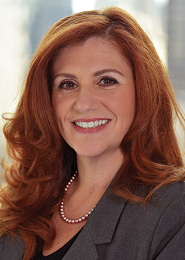
Patricia Glorioso
Guiding Principles
Editors’ Note
Patricia Glorioso is Senior Vice President and Chief Human Resources Officer for Rockefeller Group. She has served as head of Corporate Human Resources since 2003. She joined the company in 1996 in the Human Resources department of Cushman and Wakefield, Inc., a former Rockefeller Group subsidiary, where she managed the firm’s employment and employee relations activities and provided general human resources support for Rockefeller Group. Before joining Rockefeller Group, Glorioso served as Assistant Executive Director of Just One Break, Inc., (JOB), a not-for-profit employment and education organization for people with disabilities. At JOB, which she joined in 1993, Glorioso worked to establish a Business Advisory Committee to broaden career opportunities for the disabled and to increase financial support through program grants and fundraising. At JOB, she was also a contributing member of the New York City mayor’s Council for People with Disabilities. Glorioso began her career in human resources in 1985 at Merrill Lynch & Co., Inc., in recruitment, training and development, and employee relations.
Company Brief
Rockefeller Group (rockefellergroup.com) develops, owns, and operates extraordinary properties across the United States. For nearly a century, the company has delivered exceptional experiences and value creation through dedication to quality in the built environment. The company’s portfolio spans the development of multifamily, industrial, office and mixed-use projects across seven geographic regions and about six million square feet of world-class office space in Manhattan.

1271 Avenue of the Americas, Rockefeller Group’s
headquarters in New York, developed in the first expansion
of Rockefeller Center and redeveloped in 2019
Will you discuss your career journey?
My career has spanned financial services, not-for-profit and real estate ownership, management and development, with the emphasis on real estate for the past 30 years. I started out in financial services with Merrill Lynch in the cash management division where I loved learning about the business so I could communicate with clients and brokers about our services. You really had to understand it to perform. We grew from a team of 50 to 500. I embraced the training and developed a passion for the business, after which I was asked to be the first trainer of new hires so that the larger team could perform in the role. This led to other opportunities there. I began to advance to employee relations, compensation and general HR. There were 10,000 people in my division alone, working with the New York Stock Exchange, Chicago Board of Trade, and the American Stock Exchange. During that time, I was introduced to Just One Break, a nonprofit, and I was inspired and intrigued by the work they were doing. I spent three years there, serving on committees, building relationships, and ultimately leading me to Rockefeller Group, where I spent eight years as a managing director at Cushman & Wakefield, a subsidiary at that time, before transitioning fully to Human Resources at Rockefeller Group.
How do you define Rockefeller Group’s culture and values?
I think our culture is what sets us apart. The one thing from a recruiting perspective is that people come to us because of who we are and because of Rockefeller Group’s reputation. It’s the key to opening doors, to networking and talent acquisition. It’s so important to value, maintain and protect that reputation. That’s the power of a strong culture as experienced outside the company. However, that all starts on the inside with our Guiding Principles. They help define what matters to us as an organization, such as integrity and fairness, quality and one-team thinking and collaboration. These aren’t just words on a website. Instead, they represent who we are to one another and to our clients, and they make a difference.
Will you highlight the role of the CHRO, and what are the keys to being successful in the role?
I look at the lead Human Resources role as the person who clears a path. You are a sounding board – sometimes the only sounding board who employees or managers can turn to. For this to be possible, you have to have a passion for the business you’re operating in. You have to understand the business objectives so that you can be a true partner. There is a lot of communication in the role – you communicate with the CEO, the management team and the Board of Directors. You can and need to provide feedback to your management team and to employees to help deliver the best performance.
Ultimately, you determine where you need to apply your expertise each day, week or month based on the priorities of the business. Areas such as employee relations, recruitment, compensation, HR software and systems – everything is under the Human Resources executive’s purview.
How critical is it for the CHRO function to be engaged in business strategy?
It’s extremely important. You really can’t advise senior management, nor the parent company, if you don’t understand the business strategy inside and out. I head the long-term incentive development committee. It’s simply not possible to do that job effectively without understanding how we work and how incentives are tied to the success of the business. You have to know a lot about it to be able to engage with people and to keep them motivated. Business strategy revolves around a “one-team” approach. We don’t have silos. How do we expand? How do we come up with creative solutions? These are the questions that drive our recruitment and, ultimately, our future success. You have to understand the direction of the company to put the talent in place. When there is turnover, look for opportunities to elevate positions and roles – if you know the business better, you can take opportunities to help the business exponentially through strategic talent acquisition.
What are the attributes and qualities you look for when attracting talent to Rockefeller Group?
First, people who recognize the brand as an excellent brand; people who have respect for the brand and interest in the work we’re doing as a company; people who’ve done the research and recognize our advantages; people with balance sheet strength who can garner majority owner support, JVs or balance sheet improvements. We look for those who can advance projects; who can grow our pipeline in down markets. We look for people who can articulate how their skills can complement our projects and our teams. We are directly involved – even if we’re utilizing a third-party search – we want to make personal connections.

The Dupont, a 41-story residential rental building in
Brooklyn that Rockefeller Group completed in 2025
Will you provide an overview of Rockefeller Group’s investment in training and professional development?
We launched Rockefeller Group Institute in 2023, which really just formalized the kind of work we had always done over the years, but it gave it a structure and consistency that has been very beneficial for our teams. In recent years, we’ve run workshops such as Demonstrating Executive Presence which helps employees and managers become better communicators in various situations. We’ve also helped employees identify areas for growth and effectiveness. In the first quarter of 2026 we’re also launching an online Learning Hub for easily accessible courses in both soft skills and hard skills. This puts flexibility into training and professional development so employees can learn when and where they want.
You have been with Rockefeller Group for more than 20 years. What has made the experience so special for you?
The fact that I’ve learned a tremendous amount. It’s one thing to be a leader of an HR team and another to be the leader of HR strategy for an entire company. I have had some great teachers and mentors and wonderful CEOs. I’ve been able to experience changes, growth and expansion, and that’s incredibly rewarding. True reward comes from watching the organization succeed – watching people succeed. To have seen Rockefeller Group transform from primarily an owner-operator to a large national developer has been extremely rewarding. That should be your driver in HR.
What advice do you offer to young people beginning their careers?
Confidence is important, but don’t let it blind you through overconfidence early in your career. Take the time to develop your competence. Take a look at the busiest people around you. Why are they busy? Because they’ve raised their hand and established trust. What makes them successful? They don’t sit idle. More opportunities will come your way if you raise your hand and work hard. Take initiative. These are the people that get ahead. Don’t sit back and expect the next promotion. Take action. Look for autonomy and mentorship. Be willing to learn.