- Home
- Media Kit
- MediaJet
- Current Issue
- Past Issues
- Reprints (PDF)
- Photo Specifications (PDF)
- Contact Us
- PRIVACY POLICY
- TERMS OF USE
Loading

ONLINE

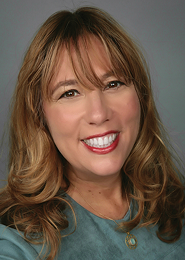
Robin Bronk
At The Intersection
Of Culture And Conscience
Editors’ Note
Robin Bronk is the CEO of The Creative Coalition, the leading nonprofit, nonpartisan, charity arm of the entertainment industry. Founded in 1989 by Alec Baldwin, Christopher Reeve, Susan Sarandon, Ron Silver, and other prominent members of the entertainment industry, The Creative Coalition is dedicated to maximizing multi-platforms of the entertainment industry behind issues of public importance. Since being appointed to the position in April 2010, Bronk has exponentially grown The Creative Coalition’s operating budget by designing and instituting corporate sponsorship programs and cause marketing opportunities, in particular for the film industry. Bronk has spearheaded the organization’s most successful advocacy and cause campaigns that have mobilized a renowned sector of the nation’s leaders in the arenas of entertainment, arts, letters, business, policy, community leadership, and the media. She directed many of the most sought-after and effective programs and events in the entertainment industry including award-winning PSA campaigns, coalition building, cause-related marketing campaigns, and policy/legislative advocacy and grassroots campaigns. Bronk hosts “On The Edge,” a podcast spotlighting stories of opportunity, discovery and courage, and tackling social issues with deep-rooted stigmas such as obesity. “On The Edge” is a capsule podcast series that is part of the “At Home With The Creative Coalition” podcast. Under her leadership, The Creative Coalition’s signature programs include the Spotlight Initiative to Support the Art & Craft of Independent Film, New York Business Leader Task Force on Runaway Production, and Moviemaker Mentors, Reel Life vs. Real Life Series, among others. Bronk is an author and public speaker, and produced the feature film, Poliwood, directed by Academy Award-winner Barry Levinson that aired on Showtime. She speaks at colleges and universities as well as the Cannes, Sundance, Toronto, and Tribeca film festivals. She has been featured in The New York Times, The Wall Street Journal, International Herald Tribune, Los Angeles Times, People, Boston Globe, and The Washington Post, among other leading newspapers. She is also a frequent guest commentator for MSNBC, Fox, CNN, and other broadcast and digital news outlets as well as a frequent contributor to The Huffington Post. Since 2010, Bronk has been a selected participant in Fortune’s annual Most Powerful Women Summit. She has received numerous awards and honors for her work including the Gracie Award for producing “Watch What You Watch,” a PSA campaign for girls and body image; the Artivist Award for her leadership in the arts and activism; the Woodstock Film Festival Trailblazer Award; and the U.S. Chamber of Commerce Intellectual Property Champion Award. She also received commendations from the White House and the Pentagon for producing an award-winning PSA campaign to help stem the military’s suicide epidemic. Bronk has published three bestselling books, The Art of Discovery, Art & Soul, and If You Had Five Minutes with the President. She also penned a column for Washington, DC’s leading newspaper, The Hill, and hosted a weekly segment on independent film for New York City’s leading radio station, WBAI-FM. Previously, Bronk served as Vice President of Corporate Community Strategies for APCO Worldwide, an independently owned global communication consultancy with offices in major cities throughout the Americas, Europe, the Middle East, Africa, and Asia. She also served as the Director of Cause Celeb, an APCO division that matches celebrities and entertainment leaders with national causes and issues of importance. Prior to joining APCO, Bronk worked for ABC News, served as a producer for a weekly C-SPAN program, and worked as a program instructor of The Close Up Foundation. Bronk serves on the New York Cultural Task Force, as well as the boards of The White House Project, The Close Up Foundation, Woodstock Film Festival, Cabos Film Festival, Carmel Art & Film Festival, Gold Coast International Film Festival, Sedona International Film Festival, Young Playwrights Inc., and is a member of the Public Relations Society of America and Women of Washington. Bronk received her BA degree from The Pennsylvania State University.
Organization Brief
The Creative Coalition (thecreativecoalition.org) is the premier nonprofit, nonpartisan 501(c)(3) advocacy organization of the arts and entertainment industry. Founded in 1989 by prominent members of the creative community, the organization is committed to educating artists and leaders on issues of public importance. Through award-winning initiatives such as the #RightToBearArts campaign, The Creative Coalition leverages the power of the arts to drive social impact and inspire civic engagement.
Will you discuss your career journey?
I started my career on Capitol Hill – not in some glamorous West Wing-style moment, but in the trenches, drafting language and lobbying for intellectual property rights. I was fascinated by the idea that creativity itself – an idea, a melody, a scene – could have tangible value worth defending. I spent years making the case that the people behind the arts deserve the same protection as the people who finance it. But somewhere between committee hearings and policy memos, I realized that while I was protecting creativity, I wasn’t actually living in it. I missed the soul – the spark that makes art matter in the first place. So, when I got a call from actor Billy Baldwin, who was then President of The Creative Coalition, asking if I’d consider leading the organization, it felt like a sign – even if the timing was completely absurd. I was literally in labor with my third child – as in hospital gown, IV, and contractions. And yet, there I was, talking to Billy about advocacy, access to the arts, and the role of artists in shaping democracy. Somewhere between a contraction and a push, I thought, this is exactly where I’m supposed to be. That was my origin story with The Creative Coalition – equal parts chaos, conviction, and a deep belief that the arts aren’t just entertainment; they’re the heartbeat of who we are. And as poetic justice would have it, that very daughter who was born during that phone call now works as a creative in the film and television industry. So, I guess you could say she’s been part of arts and entertainment from her very first breath.
What excited you about the opportunity to lead The Creative Coalition, and made you feel it was the right fit?
When The Creative Coalition came into my life, it felt like everything I’d done up to that point – from my years on Capitol Hill fighting to protect intellectual property, to my passion for storytelling and social impact – suddenly converged. It wasn’t just a professional opportunity; it was a calling. The Creative Coalition has always been something rare in the entertainment landscape – an organization founded by artists, for artists, with the belief that creativity carries civic responsibility. These were people who understood that their visibility could be used not just to promote a project, but to illuminate a cause, to move hearts, and to move policy. That ideal resonated deeply with me.
What excited me then – and still does – is that The Creative Coalition operates at the intersection of art and impact. It’s where passion becomes purpose. Where a line from a screenplay can inspire a lawmaker. Where a red carpet can turn into a platform for change. I knew right away that this was my place – a home for both the policy work and the storyteller in me. And years later, I still wake up grateful that I get to help creative people use their voices to make the world just a little bit better.
“At its core, The Creative Coalition exists to
champion the idea that the arts are not a luxury –
they are a necessity.”
How do you define The Creative Coalition’s mission?
At its core, The Creative Coalition exists to champion the idea that the arts are not a luxury – they are a necessity. We’re the nonprofit, nonpartisan voice of the entertainment industry, founded by artists who understood that creativity isn’t just about self-expression; it’s about civic expression. Our mission is to protect the First Amendment, advocate for arts funding and education, and ensure that every individual – from a child in a rural classroom to a performer on a soundstage – has access to the transformative power of the arts. We use the storytelling platforms of film, television, theater, and digital media to spotlight issues of public importance. Whether it’s freedom of expression, mental health, caregiving, or civic engagement, our work amplifies the voices of artists to drive real-world impact.
In short, The Creative Coalition stands at the intersection of culture and conscience. We harness the power of art to remind the world that creativity doesn’t just entertain – it enlightens, empowers, and unites.
Will you provide an overview of The Creative Coalition’s work, and the key issues TCC is addressing?
The Creative Coalition operates at the powerful crossroads of entertainment and social impact. We bring together leaders from Hollywood, Capitol Hill, and beyond, to use the reach of the arts to champion issues that matter – from protecting public funding for the arts to shaping conversations around mental health, family caregiving, and civic engagement. On one level, our work is about advocacy – taking artists to Washington to testify before Congress and meet with lawmakers about the importance of arts education, freedom of expression, and the National Endowment for the Arts. On another level, it’s about using the creative platforms of our members to reach millions. We produce award-winning national public service campaigns on critical issues – such as our Family Caregiving Initiative, which features today’s most notable actors who also are managing family caregiving – and our “Right to Bear Arts” campaign, which underscores how National Endowment for Arts’ dollars uplift communities from big cities to rural towns.
We also create spaces where ideas turn into action. Through our Spotlight Initiative programs at film festivals like Sundance, Tribeca, and Toronto; and our Voices of Impact dinners and policy summits in Washington and New York, we convene cultural and civic leaders to inspire collaboration between the creative community and public service.
Every project – whether it’s a PSA, a policy roundtable, or a red-carpet dinner – serves the same purpose: to remind people that the arts are not ornamental; they are fundamental. At The Creative Coalition, we make sure that the stories told on screen translate into meaningful impact off screen.
How critical is it to protect and defend the arts as a basic human need?
The arts are not an accessory to civilization – they are its foundation. They are how we record our history, express our identity, and connect to one another beyond language, politics, or geography. When you walk into a museum, sit in a darkened theater, or hear a song that stops you in your tracks, you’re reminded that humanity is not defined by what we manufacture, but by what we imagine.
To protect and defend the arts is to safeguard empathy itself. The arts teach us how to listen, to question, to dream – they give us the vocabulary for compassion. When arts education disappears from schools or when public funding for the arts is threatened, what we lose isn’t just beauty; we lose understanding.
I’ve always believed that a society without art is a society without reflection. The arts remind us who we are and what we’re capable of becoming. Defending them isn’t just a cultural act – it’s a moral one.
How valuable has it been to have such an engaged and committed board of directors?
Our Board of Directors is truly the soul of The Creative Coalition. It’s a remarkable collection of artists, storytellers, executives, and industry leaders who don’t simply lend their names – they lend their time, their passion, and their influence. They are people who have built extraordinary careers in entertainment, yet they never lose sight of their responsibility as citizens and changemakers.
Having a board led by actor and President of The Creative Coalition, Tim Daly, and composed of leading voices representing every facet of arts, letters, entertainment, media and business, means that our advocacy is infused with authenticity. These are individuals who live the issues we champion – freedom of expression, arts education, representation, and access. When they go to Capitol Hill or lend their voices to a public service campaign, they speak not as celebrities, but as cultural ambassadors who understand the transformative power of art. Their commitment elevates everything we do. They bring both creative spark and strategic vision, which is an extraordinary combination. The Creative Coalition’s strength has always come from collaboration – from artists who know that storytelling can change minds and policy – and our board embodies that truth every single day.
How do you describe your leadership style?
I believe that leadership is both an art and an act of empathy. My approach has always been rooted in collaboration – creating an environment where talented people feel empowered to bring their best ideas forward and know that their voices matter. I see my role not as the loudest in the room, but as the person who listens most closely. The Creative Coalition operates like a creative studio wrapped around a mission-driven nonprofit. That means agility is essential, but so is integrity. I encourage my team to take bold swings – to treat imagination as a discipline, not a luxury – while grounding every decision in purpose and accountability.
I also lead with gratitude. We work in an ecosystem fueled by passion, and acknowledging that energy – whether it comes from a visionary board member, a brilliant intern, or a partner in Washington – keeps the culture inspired and human.
Ultimately, I try to lead the way I advocate: with clarity, compassion, and conviction. The goal isn’t just to direct great work – it’s to build a team that feels the joy and responsibility of doing work that matters.